Bite Correction
Beverly Hills

Non-surgical bite correction in Beverly Hills by Dr. Joseph Goodman, DDS DMD. Overbite, underbite, crossbite, deep bite, grinding, and jaw pain. 27 years on Beverly Drive. No braces, no surgery. Fix the cause, not the symptom.

porcelain veneers by Dr. Goodman featured on CBS
porcelain veneers by Dr. Goodman featured on TheDoctors TV
porcelain veneers by Dr. Goodman featured on Miss California
porcelain veneers by Dr. Goodman featured on Cosmopolitian
porcelain veneers by Dr. Goodman featured on Dr. Phil
porcelain veneers by Dr. Goodman featured on beverly hills chamber of commerce

Bite Correction That Treats the Cause

Your bite is more than how your teeth fit together. It shapes the position of your lower jaw, your facial appearance, your jaw muscles, and the joints in front of your ears. When the bite is off, it can wear your teeth, strain your jaw, and leave you with headaches, clicking, or a sore jaw in the morning. Non-surgical bite correction in Beverly Hills treats that cause, not just the symptom. Dr. Joseph Goodman, DDS DMD, has corrected bites on Beverly Drive for 27 years, dual-trained in Germany and the United States.

There is more than one way to fix a bite, and the right one depends on your case. It may be a night guard, bite balancing, or repositioning the jaw. Dr. Goodman starts with the least invasive option that works and tells you honestly if your case needs braces or surgery. Below you will find what causes a bad bite, the signs to watch for, and the options that can correct it.
How Is a Bad Bite Corrected Without Surgery?

A bad bite can often be corrected without surgery when the problem is where the teeth and jaw meet, not the bone. Dr. Goodman guides the lower jaw into a healthier, more stable position and holds it with no-prep porcelain veneers. He looks at the whole system, the teeth, joints, muscles, and your facial profile. For the right patients, moving the jaw into a better position can:

  • Take stress off the jaw joints
  • Balance the muscles
  • Create a more stable bite
  • Improve how you chew
  • Bring the face into better harmony

Nothing is permanent until you approve it. Dr. Goodman calls this the test drive. He fits a removable appliance that guides your jaw into the new position, and you live with it first. If it feels right, it becomes the blueprint for your veneers. If not, he adjusts it, and no healthy enamel was touched.

Most patients arrive after being told surgery was their only option. But surgery is expensive, and moving the jawbone leaves the teeth no longer meeting, so braces often follow for years. Many bites come down to where the teeth meet instead, and those correct in weeks. See how FACE Dentistry works in three phases.

CLICK to GET DIRECTIONS

Phone:

Call: (310) 860-9311
Click to Text Us

Address:

241 1/2 S Beverly Dr Suite 201,
Beverly Hills, CA 90212

Dr. Joseph Goodman, DDS, DMD
California License 47521

Office Hours

Monday – 9:00am – 7:30pm
Tuesday – 8:00am – 5:00pm
Wednesday – 8:00am – 5:00pm
Thursday – 8:00am – 5:30pm
Friday – 8:00am – 4:00pm
Saturday & Sunday – Closed

See Inside Our Practice

Bite correction in beverly hills ca Dr. Joseph Goodman

What Bite Problems Lead to Jaw Pain?

Many bite issues force the jaw to work harder than it should. Over time that extra load strains the joints and muscles. These are the most common ones Dr. Goodman checks for:

  • Uneven bite from one side to the other
  • Open bite, where the front teeth do not meet
  • Deep bite, where the upper teeth cover the lower too far
  • Premature contacts, where some teeth hit before others
  • High spots on old fillings or crowns
  • Heavy pressure landing on the front teeth
  • Missing teeth that shift the load
  • Worn or flattened teeth
  • Grinding and clenching
  • Bite collapse from years of wear or damage

Any one of these can throw off how your teeth meet. Dr. Goodman finds which apply to you before he recommends anything.

What Bite Problems Can Be Corrected?

Most bite problems fall into four types. An overbite means the upper teeth cover the lower teeth too far. An underbite means the lower teeth sit ahead of the upper teeth. A crossbite means some upper and lower teeth meet on the wrong side. A narrow arch means the upper jaw is too tight for the teeth it holds, which crowds them. Dr. Goodman corrects many of these without surgery, along with crooked teeth caused by the crowding.

  • Overbite: upper front teeth overlap the lower too deeply, wearing teeth and straining the jaw
  • Underbite: lower teeth sit ahead of the upper, making chewing harder
  • Crossbite: upper teeth close inside the lower, wearing enamel unevenly
  • Narrow arch: a tight upper jaw crowds teeth and pushes them out of line

Whether yours can be corrected without surgery comes down to one question. Is the problem the position of your teeth, or the size and position of the jawbone itself? Scans and bite records answer it, and the answer changes what you should do next. Tooth-based cases are the ones Dr. Goodman can move and secure. Skeletal cases need braces or surgery first, and he will say so at the consultation rather than after you have paid.

NO SURGERY

NO BRACES

JUST WEEKS

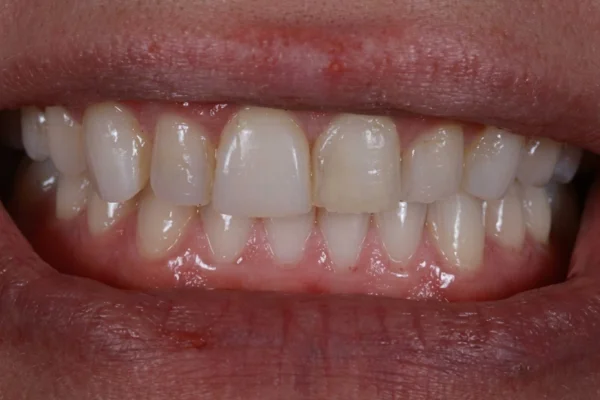
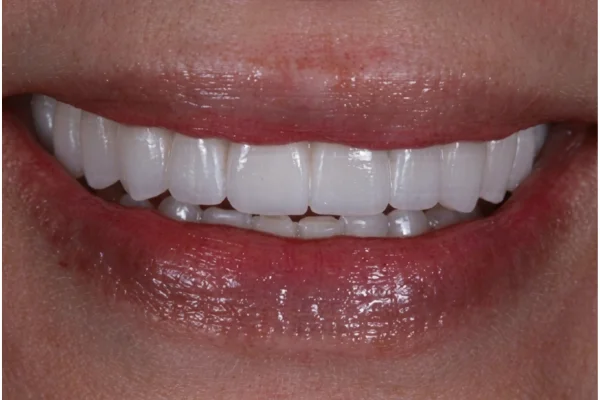
Bite Aligned, Smile Brightened

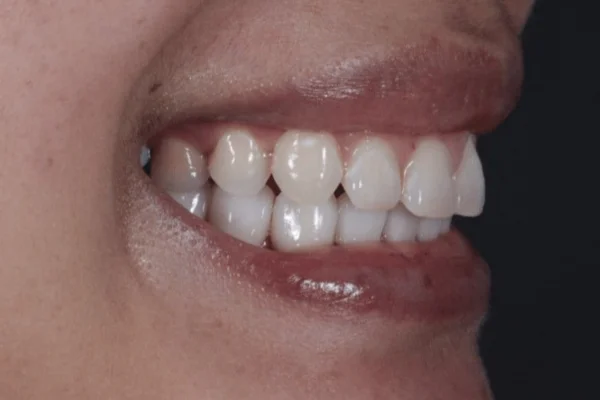
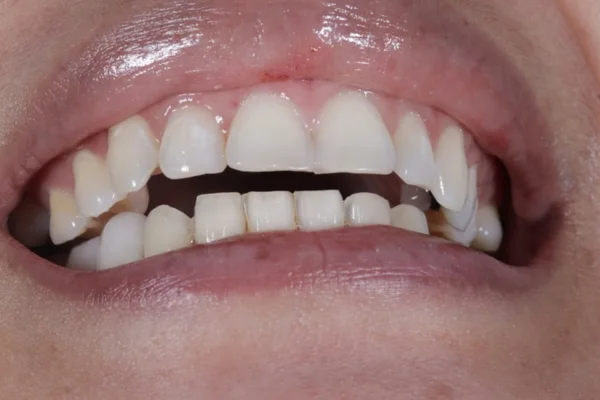
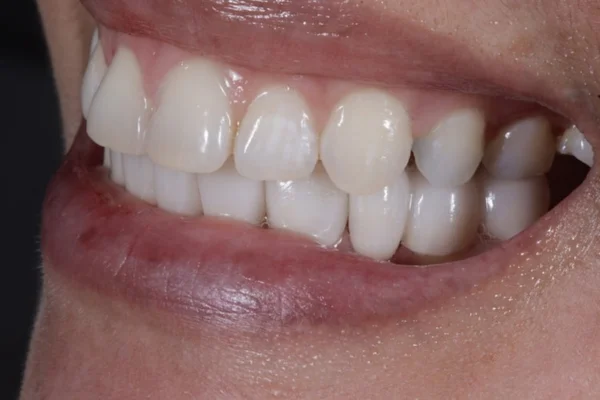
This patient’s upper and lower teeth met unevenly along the bite. Non-surgical bite correction realigned the teeth and brightened the smile.

bite correction beverly hills before 1

Before

bite correction beverly hills after

After

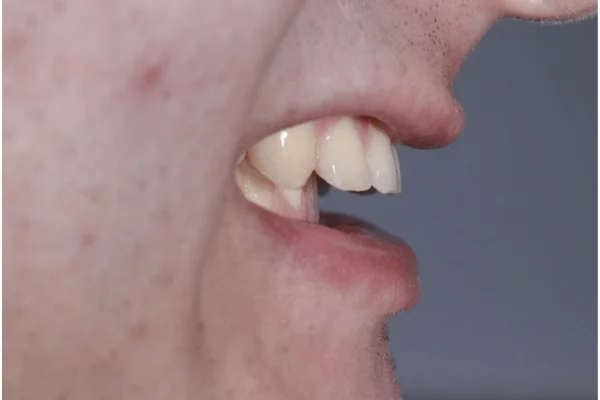
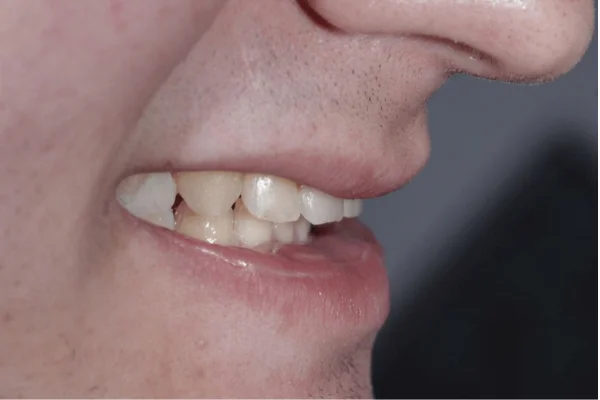
Overjet Corrected, No Surgery

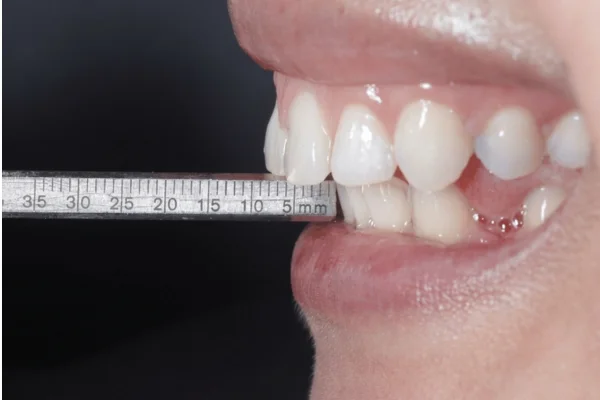
Severe overjet with the lower jaw set back. Repositioned to a balanced bite and fuller profile, no surgery, no shaving.

bite correction face dentistry beverly hills before

Before

bite correction face dentistry beverly hills after

After

Small Chin Brought Forward

The lower jaw sat 7 to 8 mm back, leaving a small chin. No-prep veneers moved it forward to an ideal bite, no surgery, no braces.

bite correction Dr. Joseph Goodman DDS

Before

bite correction Dr. Joseph Goodman DDS

After

Open Bite Closed, No Surgery

This patient had an open bite, which can drive mouth breathing, dry mouth, cavities, and bad breath. No-prep Vivaneers closed it.

bite correction Beverly hills ca Dr. Joseph Goodman DDS

Before

bite correction Beverly hills ca Dr. Joseph Goodman DDS

After

What Are the Signs of a Bad Bite?

The most common signs of a bad bite are worn front teeth, a sore jaw in the morning, chipped enamel, and teeth that meet unevenly. The damage builds slowly over years, so most patients blame stress or aging instead. Your bite is doing the work every time you chew, and a poor one concentrates that force on a few teeth. Watch for these:

  • A sore or stiff jaw or TMJ discomfort, especially in the morning
  • Clicking or popping when you open and close your mouth
  • Headaches, or tension in the temples and neck
  • Facial muscle soreness or limited opening
  • Ear pressure or pain with no infection
  • Pain while chewing
  • Worn or flattened teeth
  • Chipped enamel or teeth that meet unevenly
  • Clenching or grinding

Any one of these can have another cause. Together they usually point to how your teeth meet. What matters is how long it has been going on. Enamel does not grow back, so a bite left uncorrected keeps taking from the same few teeth. Patients often arrive after a front tooth finally chips, when the wear behind it has been building for a decade. Catching it earlier means less rebuilding later.

How Do We Evaluate Your Bite?

The right treatment depends entirely on what is causing your symptoms. A headache from clenching and a worn bite from a misaligned jaw need different care. That is why Dr. Goodman never prescribes before he examines. Every case starts with a full evaluation, which depending on your situation may include:

  • A complete bite and occlusion analysis
  • A TMJ and jaw joint exam
  • Facial and jaw position analysis
  • Digital photographs and X-rays
  • 3D imaging when the case calls for it
  • A check of the muscles that move your jaw
  • Functional bite and jaw position assessment

Only then does Dr. Goodman recommend a path. Sometimes that is a night guard. Sometimes it is bite correction or repositioning the jaw. Sometimes your case belongs with a specialist, and he tells you. You get an answer based on your exam, not a template.

bite correction mouth guard

Do You Need a Night Guard for Grinding?

If you wake up with a sore jaw, tight temples, or worn front teeth, you may be grinding at night. Grinding, called bruxism, puts hundreds of pounds of pressure on your teeth and jaw joints while you sleep. Over months and years, it flattens the biting surfaces, chips enamel, and strains the muscles around the jaw. A custom night guard absorbs that force and holds your bite in a protected position, so your teeth and joints take far less of the load.

Dr. Goodman fits each night guard to your exact bite, not the bulky one-size tray sold at the drugstore. A precise guard sits comfortably, stays in place, and spreads the pressure evenly across your bite instead of letting it concentrate on a few teeth. That protects the work you have already invested in, whether that is veneers, crowns, or your natural teeth. Because grinding often ties back to how your teeth meet, Dr. Goodman also checks your bite while he is at it, and tells you if a deeper bite issue is driving the clenching.

How Does a Bad Bite Lead to TMJ Pain?

Your teeth guide where your lower jaw closes every time you shut your mouth. When the bite is not balanced, the jaw settles into a position that stresses the joints and muscles in front of your ears. Millions of chewing and swallowing cycles over the years can build that stress. Deep inside the joint sits a small cushion of tissue full of nerves and blood vessels, and when the jaw keeps closing wrong, the pressure can irritate it. For some patients, that irritation shows up as:

  • Jaw pain
  • Pain in front of the ear
  • Ear pressure or fullness
  • Headaches
  • Muscle fatigue
  • Neck discomfort

TMJ pain is complex, and not every patient has the same cause. A bad bite is only one trigger, and Dr. Goodman does not promise to cure TMJ or migraines. He looks at your bite as one piece of the picture, and if your pain comes from another source, he tells you plainly. When a poor bite is the strain, balancing it can bring real relief. Learn more about TMJ and TMD treatment.

Bite correction in beverly hills ca Dr. Joseph Goodman

What Other Treatments Help a Bad Bite?

Bite correction is not one treatment. The right option depends on what is straining your bite and how far it has gone. Dr. Goodman starts with the least invasive step that fits, and moves to more only when your case calls for it. Options include:

  • Orthodontics or clear aligners to improve alignment
  • Restorative work to rebuild worn teeth and balance the bite
  • Physical therapy and jaw exercises to relax tight muscles
  • Botox for chronic clenching in selected cases

Not every case needs the same path, and some need very little. Dr. Goodman tells you which fits yours before any work begins.

What Should You Look for in a Bite Correction Dentist?

Look for one who examines before he treats and begins with the least invasive option. The goal is not just to adjust the bite. It is a healthy relationship between your teeth, jaw joints, muscles, and how your face looks together. Dr. Joseph Goodman, DDS DMD, is dual-trained in Germany and the United States, and courts have appointed him as a dental expert witness. He starts with scans, photographs, and a full bite record, which tells him whether your bite comes from tooth position or the jawbone.

Ask how long the dentist has done this work. Dr. Goodman began correcting bites with porcelain veneers in Germany in the early 1990s, when colleagues called the approach unpredictable. His training in gnathology and bite analysis is what makes it possible. Whenever he can, he starts with conservative, reversible care before anything permanent, and he improves the bite and jaw position to give many patients better comfort and function. Some cases still need braces or surgery, and he tells you plainly when yours is one. He would rather refer you out than oversell a veneer.

bite correction tmj pain tmd

CHOOSE YOUR

DENTIST WISELY

BEGIN YOUR PERSONALIZED DENTAL EXPERIENCE WITH DR. GOODMAN

A better bite starts with an honest exam, not a sales pitch. Dr. Joseph Goodman has practiced in Beverly Hills for 27 years. Dr. Joseph Goodman DDS DMD, California License 47521, has been delivering natural-looking smile transformations in Beverly Hills fro 27 years, serving patients from West Hollywood, Century City, Brentwood, and as far as the UAE and Germany. Call (310) 860-9311 or schedule your consultation today.

Contact Us

Frequently Asked Questions

Does non-surgical bite correction cost more than braces or surgery?

The cost is often comparable to the surgical route once you add up braces, the surgery itself, and the follow-up work. Traditional correction can mean 12 to 18 months of braces, jaw surgery, a healing period, then more orthodontics. Non-surgical bite correction avoids the hospital, the healing time, and the years of braces. Dr. Goodman reviews your case and gives you a clear number before any work begins.

Will bite correction shave my healthy teeth?

No. Dr. Goodman uses no-prep Class 1 Veneers, so your enamel stays intact. Standard veneers remove a thin layer of enamel, which does not grow back. The Cleveland Clinic notes traditional veneers require removing some enamel. The no-prep method avoids that permanent change.

How long does non-surgical bite correction take?

Most tooth-based cases finish in about two to four weeks, not the two to three years that braces and jaw surgery usually take. Dr. Goodman first fits a removable appliance to test your new bite. Once it feels right, he secures it with no-prep Class 1 Veneers. Skeletal cases that need braces or surgery take longer, and he tells you upfront which path fits your bite.

Is bite correction a substitute for braces or jaw surgery?

For appropriate, tooth-based cases, it can avoid both. Skeletal or severe bites still need orthodontics or surgery. The ADA notes braces and orthodontics are the standard for correcting bad bites. Dr. Goodman uses records to decide your path. He refers you out when braces or surgery is right.

Is the result permanent, and can I test it first?

You test the new bite first with a removable Bitetrac appliance. Nothing permanent happens until you are comfortable. Then Class 1 Veneers hold the new position. The Cleveland Clinic notes porcelain veneers are not reversible and need replacing over time. Dr. Goodman checks yours at every visit.

Related Services

Related Articles

  • Can You Fix an Overbite Without Surgery?
  • Can You Fix an Underbite Without Braces?
  • What Causes TMJ Jaw Pain and How Is It Treated?
  • Can Veneers Fix a Bad Bite?

The information on this page is provided to help you understand bite correction and the cosmetic services Dr. Goodman provides. It is not a substitute for professional diagnosis or individualized treatment. (For personalized guidance, please schedule an appointment with our licensed dental professional.)

Choose Your Dentist Wisely