Dental Implants
Beverly Hills

Permanent, natural-looking tooth replacement from a Beverly Hills cosmetic dentist who places and restores implants in one office. 27 years. Choose your dentist wisely.

porcelain veneers by Dr. Goodman featured on CBS
porcelain veneers by Dr. Goodman featured on TheDoctors TV
porcelain veneers by Dr. Goodman featured on Miss California
porcelain veneers by Dr. Goodman featured on Cosmopolitian
porcelain veneers by Dr. Goodman featured on Dr. Phil
porcelain veneers by Dr. Goodman featured on beverly hills chamber of commerce

Tooth Replacement Built to Last Decades

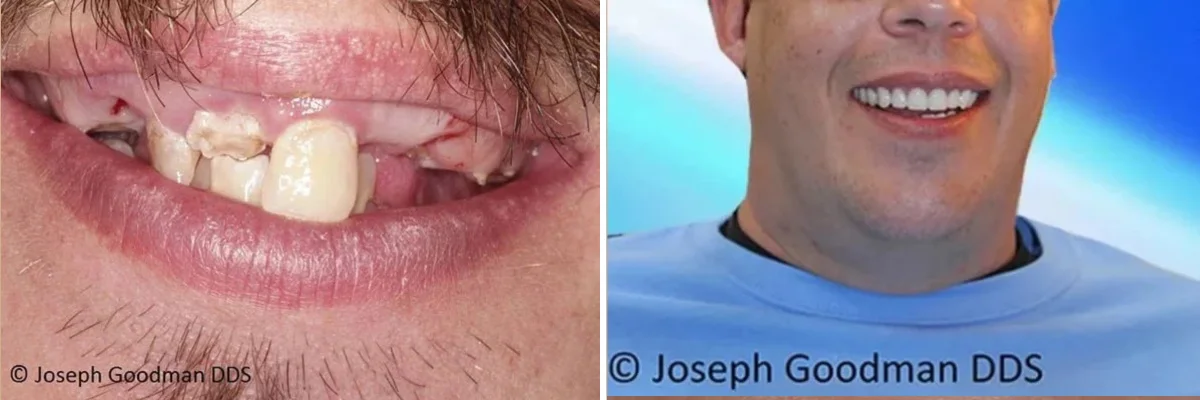
A missing tooth changes more than your smile. The gap shifts your bite, and the bone beneath starts to shrink. A dental implant stops both. Dr. Joseph Goodman has practiced in Beverly Hills for 27 years and placed implants for two decades. Three generations of the same families trust him. He does the whole job in one office. The post replaces the root, a custom crown sits on top, and the tooth looks like it grew there.

Dr. Goodman treats an implant as a last resort, not a first move. If your own tooth can be saved with a root canal or gum work, he saves it. Nothing beats the tooth you were born with. When a tooth is truly gone, an implant fills the gap and guards the bone. Anxious patients get sedation and a calm pace.
What are dental implants?

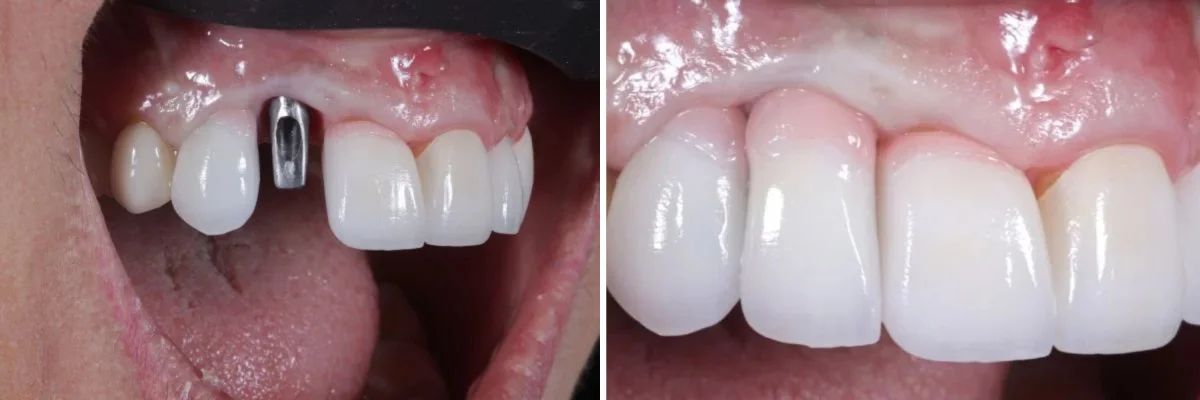
A dental implant is a small titanium post replacing a missing tooth root. Your dentist sets it in the jaw, where the bone fuses to it over a few months, a process called osseointegration. A connector and a custom crown attach on top to form the new tooth. The American Dental Association calls implants one of the biggest advances in dentistry in the past 40 years. Unlike a bridge, an implant stands on its own and leaves the neighboring teeth untouched.

Dr. Goodman offers titanium or biocompatible zirconia for holistic patients. He places the post and builds the crown in the same office, so the tooth is planned from the first scan, not added at the end. Because the post lives in the bone, it feels solid and does not slip, click, or decay. It also protects the jawbone, which shrinks once a tooth is lost. Implants are the most involved of the restorative options Dr. Goodman offers, and he recommends one only when it truly fits your case.

CLICK to GET DIRECTIONS

Phone:

Call: (310) 860-9311
Click to Text Us

Address:

241 1/2 S Beverly Dr Suite 201,
Beverly Hills, CA 90212

Dr. Joseph Goodman, DDS, DMD
California License 47521

Office Hours

Monday – 9:00am – 7:30pm
Tuesday – 8:00am – 5:00pm
Wednesday – 8:00am – 5:00pm
Thursday – 8:00am – 5:30pm
Friday – 8:00am – 4:00pm
Saturday & Sunday – Closed

See Inside Our Practice

NEW TOOTH

REAL ROOTS

Your Dental Implant Options

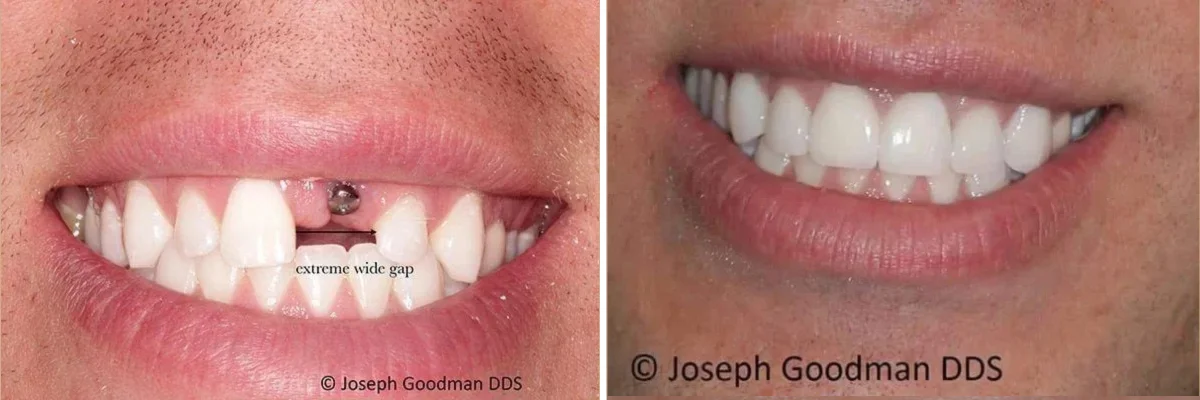
Implants can replace one missing tooth or a full arch, and the plan depends on how many teeth are gone and how healthy your jaw is. A single implant carries one crown. Several in a row support a fixed bridge. Four to six anchor a full set, known as All-on-4. Dr. Goodman maps the plan to your goals, never bigger than you need.

  • A single missing tooth, replaced with one implant and crown
  • Several missing teeth in a row, replaced with an implant bridge
  • A full arch, secured with four to six implants, known as All-on-4
  • A loose or uncomfortable denture you want anchored in place
  • A failing tooth beyond saving, removed first
  • An old extraction gap now shifting your bite

A single tooth is simple, while a full arch takes more planning and often a graft. Dr. Goodman shows you what each path involves before you decide, and if an implant is the wrong call, he says so. You leave with a clear plan, not a hard sell.

How do implants compare to bridges and dentures?

All three replace missing teeth, but only the implant replaces the root. An implant stands on its own in the bone. A bridge leans on the two teeth beside the gap, which means reshaping them. A denture rests on the gums and comes out to clean. The root is why an implant protects the jawbone while the other two do not.

Option How it works Trade-off
Dental implant A post in the bone holds a fixed crown Surgery and a few months of healing
Dental bridge Crowns on nearby teeth span the gap Reshapes healthy teeth beside it
Denture A removable plate sits on the gums Can slip and does not stop bone loss

Only the implant keeps the jawbone working, since chewing through the post stimulates the bone the way a real root would. A bridge asks two healthy teeth to carry the load, and the Cleveland Clinic notes bridges often need replacing after five to seven years. A denture costs least up front, yet it loosens and does nothing for bone loss. The best pick depends on your mouth and budget.

How does the dental implant process work in beverly hills

How does the dental implant process work?

The process runs in clear stages over three to six months. First, Dr. Goodman examines your mouth, takes 3D images, and plans the implant down to the crown. He places the titanium post, then lets it fuse with the bone. Once it heals, he attaches the custom crown you see when you smile. You wear a temporary tooth in between, so no gap ever shows.

One dentist handling both parts changes the result. Because Dr. Goodman plans the crown from day one, the final tooth fits the plan instead of getting bolted on later. Healing takes three to six months while the bone bonds to the post, and a thin jaw gets a graft first. When the bone is ready, the crown goes on.

How much do dental implants cost in Beverly Hills?

In Beverly Hills, single implant cost depends on your bone and whether you need an extraction or graft first. A full arch with All-on-4 costs more than a single implant. Dental insurance can cover part of the treatment, so check your plan. Dr. Goodman gives you the full number before anything starts. We also offer financing and payment plans.

You will never get pushed into work you do not need. Dr. Goodman recommends an implant only when it serves your health, and he weighs it against a bridge or denture on cost and lifespan. An implant costs more up front and tends to outlast the alternatives, the better value over time. The practice takes CareCredit for larger plans, and the quote you hear is the quote you pay. No hidden add-ons.

Who is a good candidate for dental implants

Who is a good candidate for dental implants?

You are a good candidate for a dental implant when you have healthy gums, enough jawbone to hold the post, and general health steady enough to heal. Most adults qualify. The main requirement is bone, since the implant fuses to it over three to six months. Dr. Goodman confirms your fit with a 3D scan before any work begins.

A few things raise the risk, and none of them means an automatic no. Thin bone can be rebuilt with a graft. Controlled diabetes and treated gum disease still allow strong results. Smoking and unmanaged health conditions lower success, so Dr. Goodman addresses those first. If an implant is the wrong move for you, he says so and points you to a better option. You get an honest answer, not a hard sell.

CHOOSE YOUR

DENTIST WISELY

BEGIN YOUR PERSONALIZED DENTAL EXPERIENCE WITH DR. GOODMAN

A missing tooth will not replace itself, and the gap only grows costlier the longer it sits. An implant restores your bite and your confidence for the long run. Dr. Joseph Goodman DDS DMD, California License 47521, has been delivering natural-looking smile transformations in Beverly Hills since 1999, serving patients from West Hollywood, Century City, Brentwood, and as far as the UAE and Germany. Call (310) 860-9311 or schedule your consultation today.

Contact Us

Frequently Asked Questions

Do dental implants hurt?

Most patients feel little during placement and only mild soreness for a day or two after. Dr. Goodman numbs the area fully, so the surgery itself is comfortable, and over-the-counter relief handles what follows. About 60 percent of his patients deal with dental anxiety, so comfort gets planned from the start. For nervous patients, an in-house anesthesiologist, Dr. Thomas Einstein, handles deeper sedation, and no one rushes you or judges the fear.

What if I do not have enough bone for an implant?

This is common, and it rarely ends the plan. When the jaw is thin or soft, a bone graft rebuilds support, acting as a scaffold your own bone grows into over a few months. Dr. Goodman checks your bone with 3D imaging and tells you up front if a graft is needed. Research on implants placed in grafted bone reports survival on par with natural bone, per a study in the National Library of Medicine.

Can I get implants if I have diabetes, an autoimmune condition, or low bone density?

Often yes, though each needs a closer look. With controlled diabetes, implants succeed at rates close to healthy patients, while poorly controlled blood sugar raises the risk. Autoimmune conditions and low bone density call for the same careful planning, not an automatic no. A study of medically managed patients found about 96 percent implant survival at 10 years when conditions were controlled first. Dr. Goodman reviews your full health history before he plans the work.

How long do dental implants last, and can one fail?

With good care, implants last decades. More than 9 in 10 still work at 10 years, and the post can serve for life while the crown may need replacing sooner. Failure is uncommon, and when it happens it usually traces to gum infection or bone loss, not the implant itself. Long-term research puts 10-year survival as high as 95 percent. Brush, floss around it, keep your cleanings, and skip tobacco.

Is a single tooth implant worth it, or is a bridge better?

Both replace one tooth, but differently. A bridge caps the two teeth beside the gap, grinding down healthy teeth, and tends to need replacing in five to seven years. An implant stands alone, leaves the neighbors untouched, and protects the bone under the gap. The Cleveland Clinic notes bridges are harder to clean and do not last as long. A bridge is faster and lower cost up front, so Dr. Goodman weighs both for your tooth and budget.

What is the downside of dental implants?

The main downsides are cost, time, and minor surgical risk. An implant costs more up front than a bridge or denture, and healing runs three to six months. Infection, nerve irritation, or sinus issues are possible but uncommon in healthy patients. The Mayo Clinic notes most complications stay minor and treatable. Dr. Goodman screens your health and 3D scans first to keep your risk low.

The information on this page is provided to help you understand dental implants and the cosmetic services Dr. Goodman provides. It is not a substitute for professional diagnosis or individualized treatment. (For personalized guidance, please schedule an appointment with our licensed dental professional.)

Choose Your Dentist Wisely