Gum Disease Treatment
Beverly Hills

Gentle, non-surgical gum disease treatment from Dr. Joseph Goodman and the hygienist team patients rate highest. Save the tooth first. Choose your dentist wisely.

porcelain veneers by Dr. Goodman featured on CBS
porcelain veneers by Dr. Goodman featured on TheDoctors TV
porcelain veneers by Dr. Goodman featured on Miss California
porcelain veneers by Dr. Goodman featured on Cosmopolitian
porcelain veneers by Dr. Goodman featured on Dr. Phil
porcelain veneers by Dr. Goodman featured on beverly hills chamber of commerce

Catch It Early. Keep Your Teeth.

Gum disease treatment in Beverly Hills works best when you start early, while the fix is still simple. Dr. Joseph Goodman has cared for Beverly Hills families for 27 years, and his patients now span three generations. He treats early and moderate gum disease in the office, and he refers advanced surgical cases to a trusted periodontist. You do not have to lose teeth to gum disease.

Gum care sits inside the general dentistry work Dr. Goodman does every day in Beverly Hills and is the leading cause of adult tooth loss, and it often begins with no pain at all. Caught early, it stays manageable, and the care is gentle. If you have already lost a tooth, dental implants can rebuild your bite. Below are the warning signs, the stages and their care, your risk factors, and honest cost numbers.
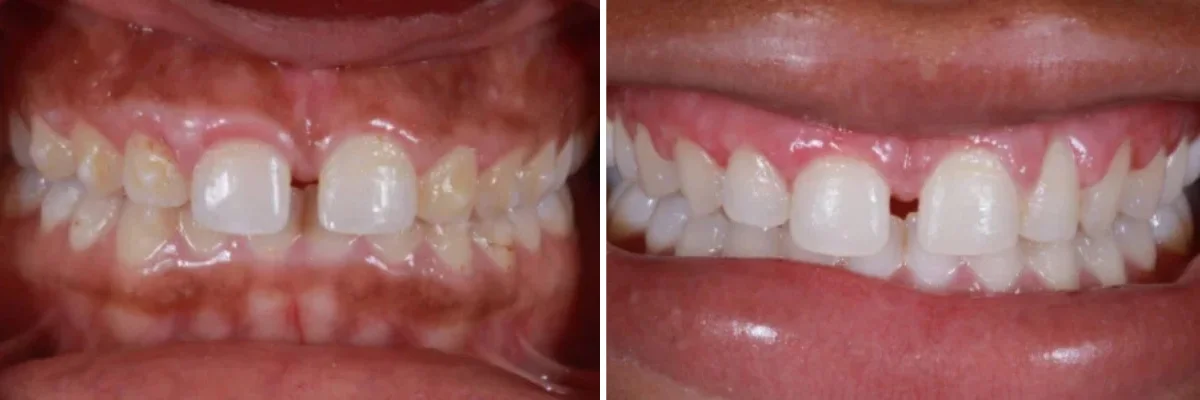
What is gum disease, and why does it threaten your teeth?

Gum disease is a bacterial infection of the gums and the bone that hold your teeth in place. It runs in two stages. Gingivitis is the early, reversible stage, and periodontitis is the advanced stage, where bone loss begins. More than 2 in 5 adults over age 30 have some form of periodontitis, so this is common.

Plaque is the root cause. It is a sticky film of bacteria that hardens into tartar, also called calculus, along the gumline. Gingivitis often clears up with a professional cleaning and better home care. Periodontitis cannot be reversed, though steady care slows it down and protects the teeth you still have.

CLICK to GET DIRECTIONS

Phone:

Call: (310) 860-9311
Click to Text Us

Address:

241 1/2 S Beverly Dr Suite 201,
Beverly Hills, CA 90212

Dr. Joseph Goodman, DDS, DMD
California License 47521

Office Hours

Monday – 9:00am – 7:30pm
Tuesday – 8:00am – 5:00pm
Wednesday – 8:00am – 5:00pm
Thursday – 8:00am – 5:30pm
Friday – 8:00am – 4:00pm
Saturday & Sunday – Closed

See Inside Our Practice

REAL PATIENT

RESULTS

What are the warning signs of gum disease?

Gum disease is often painless in the early stage, so the warning signs are easy to miss. The first clue is usually bleeding when you brush or floss. Because up to 47 percent of adults over 30 carry some gum disease, these small signals matter. Watch for the changes below.

  • Gums that bleed when you brush or floss
  • Red, swollen, or tender gums
  • Bad breath or a lingering bad taste
  • Gums pulling back, so teeth look longer
  • Teeth that feel loose or shift when you chew
  • New gaps, or a change in how your bite fits

None of these signs guarantees tooth loss. They mean it is time for a check. Receding gums expose the sensitive roots, and loose teeth signal that the infection has reached the bone. We tell you exactly what we see, in plain language, with no scare tactics.

How do you treat gum disease at each stage?

Treatment matches the stage of your gum disease. Healthy gum pockets measure 1 to 3 millimeters, and once they deepen past that, we plan care around what the tissue needs. Early disease responds to a cleaning and better habits, moderate disease calls for scaling and root planing, a deep cleaning below the gumline, and advanced disease needs surgery from a specialist.

Stage What you may notice Reversible? Typical care
Gingivitis (early) Bleeding, red or puffy gums Yes Professional cleaning, better home care
Early to moderate periodontitis Deeper pockets, mild recession No, but controllable Scaling and root planing (deep cleaning)
Advanced periodontitis Bone loss, loose teeth No, but manageable Referral to a trusted periodontist for surgery

We handle gingivitis and early periodontitis right here, with cleanings, ozone therapy, scaling and root planing, and periodontal maintenance visits that keep the infection in check. When gum disease reaches the surgical stage, we refer you to a periodontist we trust. We do not do unnecessary work, so if a deep cleaning will hold the line, we will not push you toward surgery.

risk of gum disease in beverly hills ca

What raises your risk of gum disease?

You can brush well and still develop gum disease, because certain factors raise your risk. Smokers face up to four times the risk of nonsmokers, which makes tobacco one of the strongest factors. Diabetes, stress, genetics, and hormone shifts during pregnancy or menopause all add to the odds. Gum disease is also linked to heart disease, stroke, and diabetes, so healthy gums support the rest of you.

  • Smoking or any tobacco use
  • Diabetes, or blood sugar that runs high
  • A family history of gum disease
  • Stress that wears down your defenses
  • Hormone changes in pregnancy or menopause
  • Medications that reduce saliva

Your daily habits still carry the most weight. Brushing twice a day and cleaning between your teeth clears the plaque that starts the whole process, and regular dental exams and regular cleanings lift the hardened tartar you cannot reach at home. If you smoke, quitting is the single best move for your gums. If you have diabetes, steady blood sugar protects them too.

How much does gum disease treatment cost in Beverly Hills?

Cost depends on your stage and how much care you need. Scaling and root planing costs more than a routine cleaning, since it treats gum disease across the mouth in quadrants. Your stage and your plan set the number. Dr. Goodman reviews your benefits and gives you an honest quote before any treatment begins. We also offer financing and payment plans.

The honest math favors early care. A cleaning today costs a fraction of surgery and tooth replacement later. We accept CareCredit, so you can spread payments over time. No surprise bills, and no pressure to say yes. Prevention is the best value in dentistry, so book before a small problem grows.

CHOOSE YOUR

DENTIST WISELY

BEGIN YOUR PERSONALIZED DENTAL EXPERIENCE WITH DR. GOODMAN

You do not have to live with sore or bleeding gums. The first step is a simple check to learn where your gum health stands. Dr. Joseph Goodman DDS DMD, California License 47521, has been delivering natural-looking smile transformations in Beverly Hills since 1999, serving patients from West Hollywood, Century City, Brentwood, and as far as the UAE and Germany. Call (310) 860-9311 or schedule your consultation today.

Contact Us

Frequently Asked Questions

Does gum treatment hurt, and what if you feel nervous?

Gum treatment stays comfortable. We numb the area before any deep cleaning, so you feel pressure, not pain. About 60 percent of our patients arrive with some dental anxiety, so a calm visit is standard here. If you want deeper calm, sedation is available through our in-house dental anesthesiologist.

Nervous patients often tell us the cleaning was easier than they feared. We explain each step before we start, and we stop whenever you need a break. You can read more on our sedation dentistry page. Comfort is how we get anxious patients the gum care they have been putting off.

Can a general dentist treat gum disease, or do you need a periodontist?

It depends on the stage. A general dentist treats gingivitis and early to moderate periodontitis with professional cleanings and scaling and root planing, which the American Academy of Periodontology lists among standard nonsurgical treatments. Advanced cases that need gum or bone surgery belong with a periodontist. Dr. Goodman treats the early and moderate stages in the office and refers surgical cases to a specialist he trusts. He tells you honestly which stage you are in.

When is it too late to fix receding gums?

Receded gum tissue does not grow back on its own, but it is rarely too late to act. The first job is to find the cause, whether that is gum disease, brushing too hard, or grinding at night. Once we address the cause, we can stop the recession from getting worse, which the Cleveland Clinic notes is the realistic goal. If a root is exposed and at risk, we can discuss the minimally invasive pinhole technique, and we refer traditional gum grafts to a periodontist.

Does insurance cover gum disease treatment?

Often, yes, at least in part. Many dental plans cover a share of diagnostic exams and nonsurgical care like scaling and root planing, because these treat an active infection. Coverage for surgery varies by plan and severity. Care ranges from a deep cleaning to surgery depending on the stage, as the Mayo Clinic outlines. We review your benefits with you, give an honest quote before we start, and accept CareCredit for anything your plan leaves out.

What is Stage 3 gum disease?

Stage 3 is advanced periodontitis. By this point the infection has destroyed some of the bone that supports your teeth, deep pockets have formed, and teeth may loosen, which the Cleveland Clinic describes as a permanent change to the supporting structures. The bone already lost does not return, so care focuses on stopping further damage and saving the teeth that remain. Stage 3 usually needs a periodontist, and Dr. Goodman coordinates the referral and stays involved in your care.

The information on this page is provided to help you understand gum disease and the general services Dr. Goodman provides. It is not a substitute for professional diagnosis or individualized treatment. (For personalized guidance, please schedule an appointment with our licensed dental professional.)

Choose Your Dentist Wisely