

Know Your Real Options Before You Schedule Surgery
A jaw surgery alternative in Beverly Hills is often the search after a surgical plan feels wrong. Dr. Joseph Goodman, DDS, DMD, has practiced in Beverly Hills for 27 years. He trained in both Germany and the United States, and he holds California license 47521. Here you will see what surgery asks of you and what a good second opinion measures. You will also learn when surgery is still the honest answer.
Most people in this spot fear saying yes to an operation they never needed, or no to one they did. Either mistake costs years, since surgery with braces runs two to three years. Dr. Goodman meets many patients who were told by several offices to plan on surgery and nothing else. His FACE Dentistry work, which he calls Face-Driven Dentistry, starts with a measured answer instead of a sales pitch.
Is There a Real Alternative to Jaw Surgery in Beverly Hills?
Yes for many mild and moderate bite problems, and no for severe skeletal ones. Teeth can be moved or rebuilt, but an adult jaw bone does not change size without surgery. After 27 years, Dr. Goodman sorts patients into those two groups using records instead of first impressions.
Our guide on how to fix a jaw problem without surgery lists every non-surgical route. What sets this office apart is the order of steps. Before anything permanent happens, Dr. Goodman tests your new bite with TMJtrac, a removable jaw testing appliance. You feel the change in daily life before you commit.
How Does Jaw Surgery Compare With a Non-Surgical Bite Plan?
Corrective jaw surgery is major surgery, and the numbers show it. Cleveland Clinic reports up to four to six hours under general anesthesia, then one to three hospital days. With braces, the full process runs two to three years. A non-surgical plan skips the operating room entirely, though it can never move bone the way surgery does.
| Factor | Orthognathic jaw surgery | Non-surgical bite plan with Dr. Goodman |
| Time in surgery | Up to 4 to 6 hours | No surgery |
| Anesthesia | General anesthesia | No general anesthesia needed for the bite work |
| Hospital stay | 1 to 3 days | None |
| Back to daily routine | 3 to 4 weeks for most people | No surgical healing period |
| Full healing | Up to a year | Not applicable |
| Total timeline | 2 to 3 years with orthodontics | Set after records, varies by case |
| Trial before committing | No | Yes, a removable TMJtrac test |
| Changes the jaw bone | Yes | No |
Source: Cleveland Clinic, Jaw Surgery (Orthognathic), last reviewed September 25, 2026, for the surgery column. Non-surgical column: Dr. Goodman’s FACE Dentistry process. Results vary by case.
Read the last row first, since it decides everything above it. Only surgery moves bone, which makes it the right call for severe skeletal cases. Everyone else may face months of recovery for a problem teeth can solve.
Why Do So Many People Hear Surgery Is the Only Option?
For 27 years, Dr. Goodman has given second opinions, including for insurance companies reviewing complex cases. Many bite problems get measured only at the bone level. A surgeon or orthodontist reads the jaw on an X-ray, then plans around moving bone. Rebuilding the bite with porcelain is a separate skill.
Dr. Goodman names non-surgical bite correction as his biggest difference from other Beverly Hills dentists. It covers overbites, underbites, and crossbites. Some of those patients still need surgery, and he tells them so before they spend money, but many do not.
People told surgery is the only option often arrive with jaw pain, worn teeth, or an off bite. Many have already seen more than one provider. Our comparison of overbite jaw surgery and non-surgical correction covers the overbite version of this choice.
What Should You Bring to a Second Opinion on Jaw Surgery?
Bring the records you already paid for, and the second opinion moves much faster. You can request each one from the first office. These six items let Dr. Goodman compare his own read against the plan you were given, and missing a few is fine.
- The written surgical plan or treatment letter
- Your cephalometric X-ray and its tracing
- Any 3D CBCT scan of your jaws
- Orthodontic records, scans, or bite models
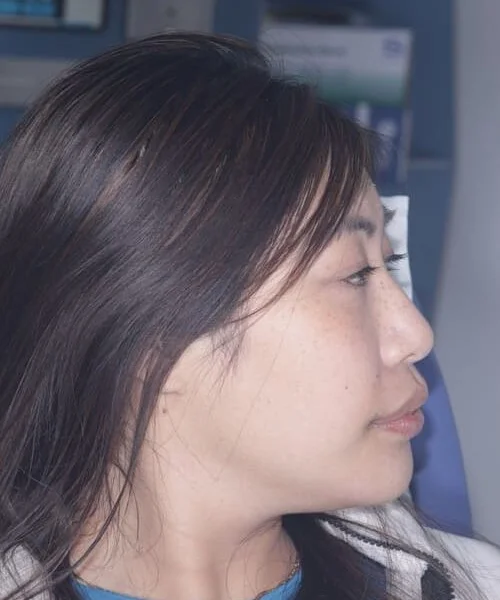
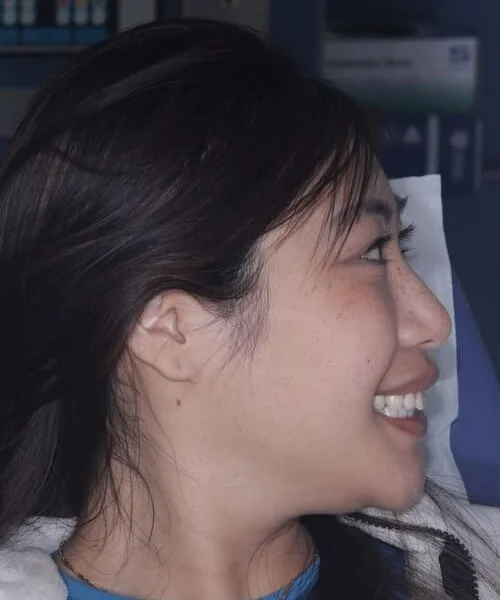
- Side-profile photos, old and recent
- A list of symptoms, such as jaw pain, headaches, or worn teeth
With these in hand, the visit focuses on your case instead of repeating tests. You leave knowing which group your bite sits in. If you are borderline, both sides get laid out plainly, with the time each one takes.
What Does Dr. Goodman Check Before He Says Yes or No?
Dr. Goodman checks your bite class, how your teeth meet, and how your jaw moves. He sets those findings against your X-ray bone measurements. Then he sorts your bite into Class 1, 2, or 3 and decides what teeth can reach. Too large a bone gap means a surgeon referral.
When the case fits, the Face-Driven Dentistry plan moves to TMJtrac, a removable appliance for your jaw. You test it in daily life, at home and at work. Nothing permanent is placed until the test feels right, and results vary from one patient to the next.
How Can You Tell a Second Opinion Is Honest?
An honest second opinion sounds different from a sales visit. It rests on measurements, admits what it cannot fix, and sends you elsewhere when another office fits better. Watch for these six signs at any office, including ours, since each one takes seconds to check.
- They measure before they recommend anything
- They tell you when another kind of specialist fits better
- They offer a reversible test before permanent work
- They say plainly what will not change, such as jaw bone
- They do not add work you never asked about
- They put the plan and the timeline in writing
When patients refer friends here, they tend to repeat one line. If something will not work, he says so before you spend a single dollar on it. Hold every office to the same test.
Get a Measured Answer Before You Book the Operating Room
Dr. Joseph Goodman, DDS, DMD, has corrected bites in Beverly Hills for 27 years, many without surgery. Patients reach him from Bel Air and Westwood. The drive along Wilshire Boulevard puts the office minutes from Cedars-Sinai Medical Center. The Face-Driven Dentistry plan has three parts: your records, a TMJtrac test when it fits, and a straight answer. The goal is a comfortable bite and a face you still recognize, though results vary by case.
Call (310) 860-9311 to book a jaw surgery second opinion with Dr. Goodman, or request a time online at topbeverlyhillsdentist.com. Bring your surgical plan and X-rays to the visit. You will leave knowing which group your case falls in.
What Else Do People Ask Before Choosing Jaw Surgery?
Is 30 too late for jaw surgery?
No, and age matters less than whether your jaw has finished growing. Mayo Clinic gives typical jaw surgery timing as 16 to 18 and older for females. For males, the range is 18 to 21 and older. No upper age cutoff appears, and adults in their 30s and 40s do have surgery when the bone requires it. Non-surgical bite work has no growth requirement at all.
What is the least invasive jaw surgery?
Chin surgery is usually the smallest procedure touching the jaw. MedlinePlus describes chin augmentation with an implant or a bone cut. Most people return to work within 7 to 10 days, and swelling fades by about 6 weeks. Still, a chin procedure changes the profile without changing how your teeth meet. It does not fix a bite problem by itself.
Is jaw surgery worth it for TMJ?
For most people with jaw joint pain, surgery is not the first step. The National Institute of Dental and Craniofacial Research says to weigh benefits, risks, and alternatives before irreversible treatment. Surgery is on its list, and it notes TMD symptoms often fade without treatment. The same caution applies to permanent bite changes, which is why a reversible test comes first here.
Is jaw surgery very risky?
It is major surgery, though most patients are pleased with the result. Cleveland Clinic lists complications such as lingering numbness, jaw pain, bleeding, and infection. Satisfaction across studies ran between 83 and 100 percent. When bone is the real problem, the risk is usually worth taking for a lasting fix. It makes less sense when teeth can do the job.