


See Your Profile the Way a Bite Dentist Sees It
A deep bite side profile usually shows up first in photos, as a chin tucked too far back. Dr. Joseph Goodman, DDS, DMD, has corrected bites in Beverly Hills for 27 years. He trained in Germany and the United States, earning a DMD in Aachen before advanced training at UCLA. Below, you will learn how each bite type marks your profile and which marks dental work can reach.
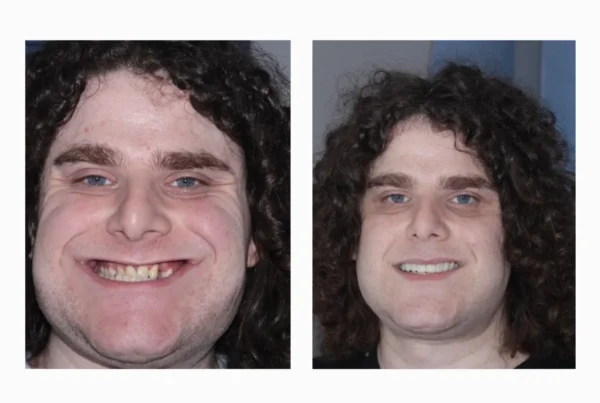
The biggest fear is looking fake, since most people have seen bad work on a friend. The stakes run past looks, because a deep bite grinds the front teeth down over time. As teeth wear, the lower face folds in and looks older. Between 25 and 30 percent of Dr. Goodman’s patients arrive unhappy with work done elsewhere. His FACE Dentistry approach, which he calls Face-Driven Dentistry, reads the face first and the teeth second.
How Does a Deep Bite Change Your Side Profile?
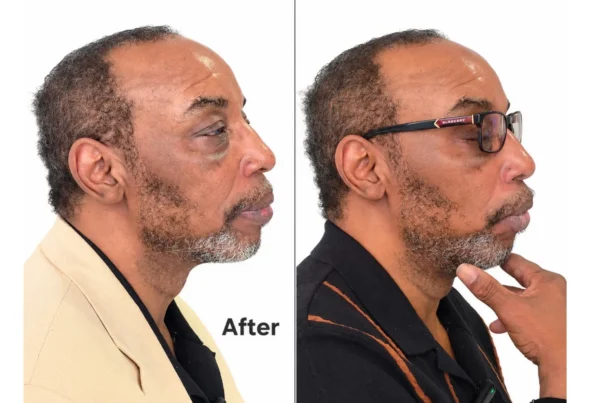
A deep bite pulls the lower third of your face up and back. In a balanced face, nose base to chin runs about one third of facial height. When upper teeth cover too much of the lower teeth, the jaw closes past its natural stop. The chin then tucks in toward the neck.
In profile, the lips press tight and look thin, with a deep crease under the lower lip. The nose can also read larger, since less chin sits below it. In federal survey data on 8,804 untreated US adults, about two in three had a meaningful bite problem. Overbite also grew more common with age.
Source: NHANES III federal survey data on untreated US adults aged 17 to 46, analyzed in Orthodontics and Craniofacial Research, June 2019.
What Does an Overbite Do to Your Face Compared With a Normal Profile?
In Dr. Goodman’s Class 2 group, upper teeth sit 3 to 6 millimeters ahead of the lower teeth. A normal Class 1 bite keeps the gap near 1 to 2 millimeters. The extra distance shows up as a small, reclined chin with low chin height. The nose and chin stop lining up.
A normal profile has a clear nose-to-chin line, with the lips resting gently closed. In Class 2, the lower lip often slips behind the upper front teeth at rest. The mouth strains to close, and the jaw can look weak even with strong cheekbones.
People mix up overjet and deep bite all the time. Overjet measures how far the upper teeth stick forward, while deep bite measures vertical cover. Many Class 2 faces carry both, so Dr. Goodman measures each before planning non-surgical overbite correction.
What Does an Underbite Do to Your Face Shape?
An underbite, Class 3 in Dr. Goodman’s grouping, puts the lower front teeth ahead of the upper ones. When you smile, people see lower teeth and little or no upper teeth. In profile, the chin and lower lip lead the face. The midface can look flat by comparison.
This is the bite where honesty matters most. When the lower jaw itself grew too far forward, teeth alone rarely move the profile enough, and Dr. Goodman tells you so first. When a case fits, his non-surgical underbite correction rebuilds how the teeth meet. Results vary from face to face.

Which Profile Changes Can Dental Work Improve Without Surgery?
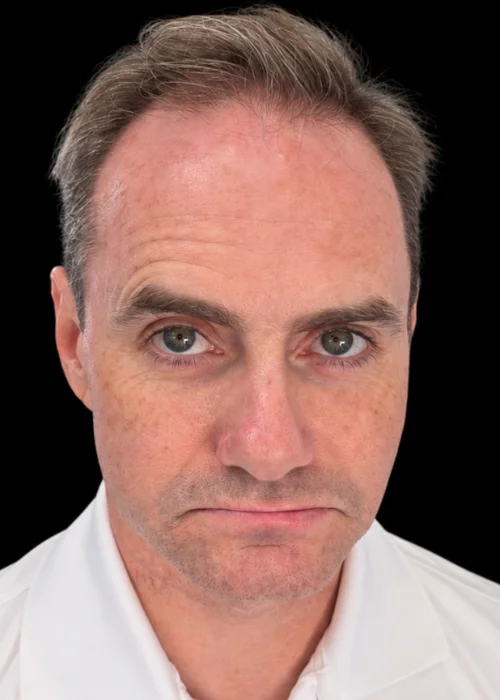
Dental work can improve many deep bite and Class 2 profiles, along with worn bites missing height. Strong skeletal Class 3 patterns are different. When the jaw bone itself is the cause, jaw surgery is often the honest call. The table sorts all 5 patterns by what you see and the likely path.
| Bite pattern | What you see in profile | Typical measurement | Often improved with dental work | When a surgeon may be the better call |
| Class 1, balanced | Clear nose-to-chin line, lips close easily | 1 to 2 mm overjet | Not needed for the profile | Not applicable |
| Deep bite | Tucked chin, thin lips, crease under the lower lip | Upper teeth cover lower teeth past the normal range | Often, by rebuilding bite height | Rarely, unless the jaw is skeletally small |
| Class 2 overbite | Small, reclined chin, low chin height | 3 to 6 mm overjet | Often, in mild to moderate cases | Severe jaw size gaps |
| Class 3 underbite | Chin and lower lip lead, flat midface | Lower teeth sit ahead of upper teeth | Mild dental cases | Lower jaw grew too far forward |
| Worn bite | Thin lips, chin closer to nose, older look | Lost bite height from grinding | Often, by restoring height | Rarely |
Source: Dr. Goodman’s clinical bite class descriptions, confirmed July 2026. Results vary by case.
Every row carries a hedge, because two profiles with the same 4 millimeter gap can need different plans. Chin bone and soft tissue vary. If dental work will not reach your goal, Dr. Goodman tells you before you spend money.
Why Does a Worn Bite Make Your Face Look Older?
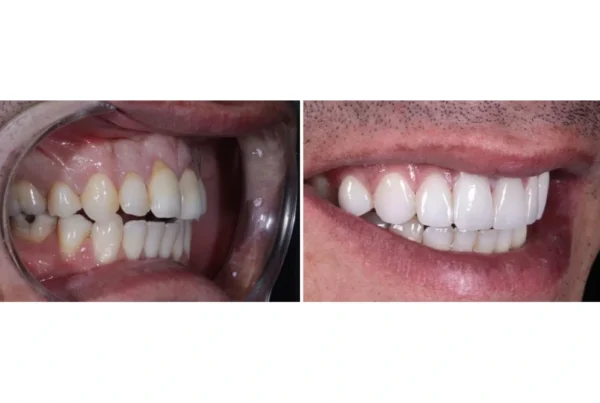
Worn teeth age the face because the bite loses height. Each millimeter of enamel ground away lets the jaw close further, and the soft tissue folds with it. At first visits, Dr. Goodman hears two complaints most often: an old look, and teeth worn from grinding.
- Lips thin out and roll inward
- Lines from the nose to the mouth corners deepen early
- The mouth corners turn down at rest
- Front teeth show less in a smile, with flat edges
- The chin sits closer to the nose in side photos
Skin treatments miss these signs, because the cause sits in the teeth and the bite. Face-Driven Dentistry rebuilds lost bite height so the lips and chin can settle back toward balance. Results vary, so the first step is measuring how much height you lost.
How Can You Check Your Own Bite Type at Home?
You can get a rough read on your bite in about two minutes with a phone camera. Stand side-on to a mirror, relax your face, and bring your back teeth together. Then look for five things. It does not replace an exam, but it tells you what to ask.
- How much of your lower front teeth hide behind the upper ones
- The gap between upper and lower front teeth
- Whether your chin sits behind or ahead of your lower lip
- A deep fold under your lower lip
- Whether you show more upper or lower teeth when you smile
If your lower teeth almost disappear, a deep bite is likely part of your profile. If the lower teeth lead, the pattern points toward Class 3. At the visit, Dr. Goodman confirms the read with records and TMJtrac, his jaw tracking and testing process.
Know Your Bite Type Before You Change Your Smile
Dr. Joseph Goodman, DDS, DMD, has read bites and faces in Beverly Hills for 27 years. He holds California license 47521. Patients come in from Holmby Hills and Cheviot Hills along Olympic Boulevard, or from near Beverly Gardens Park. The plan is simple: photos, a bite exam, and a plain answer on what Face-Driven Dentistry can change. The aim is a face where your chin, lips, and teeth look like they belong together.
Call (310) 860-9311 to book a bite and profile visit with Dr. Goodman, or request a time online at topbeverlyhillsdentist.com. Bring an old side-angle photo if you have one, since it shows how your profile changed. You leave the first visit knowing your bite type and your options.
What Else Do People Ask About Their Bite and Face?
Is a deep bite worth fixing?
For many adults, yes, because of wear. A lifetime of grinding wears away enamel and flattens the biting edges, per Harvard Health. A deep bite can focus this wear on the front teeth. Fixing it early protects enamel you cannot grow back, and results vary by case. Mild cases with no wear or jaw pain may only need monitoring.
Is it ever too late to fix an overbite?
No age cutoff exists for most dental overbite treatment. MedlinePlus notes orthodontic treatment in adults is often successful, though braces may stay on longer. Bone growth has stopped in adults, so a skeletal overbite may also need a surgeon alongside dental work. Jaw structure decides the plan, not your birthday.
What does a 100% overbite look like?
A 100% overbite means the upper front teeth fully cover the lower ones when you bite. Cleveland Clinic calls overlap beyond 2 to 4 millimeters an overbite. At 100%, the lower teeth vanish from view, often with a tucked chin and a crease under the lower lip.
Can you still be attractive with an overbite?
Yes, and a mild overbite often reads as normal, since attraction tracks balance more than any single measurement. Mayo Clinic lists a more balanced face with a small chin or overbite among jaw surgery goals. Most overbites never need surgery. When one starts flattening the chin or wearing teeth, it is worth an exam.