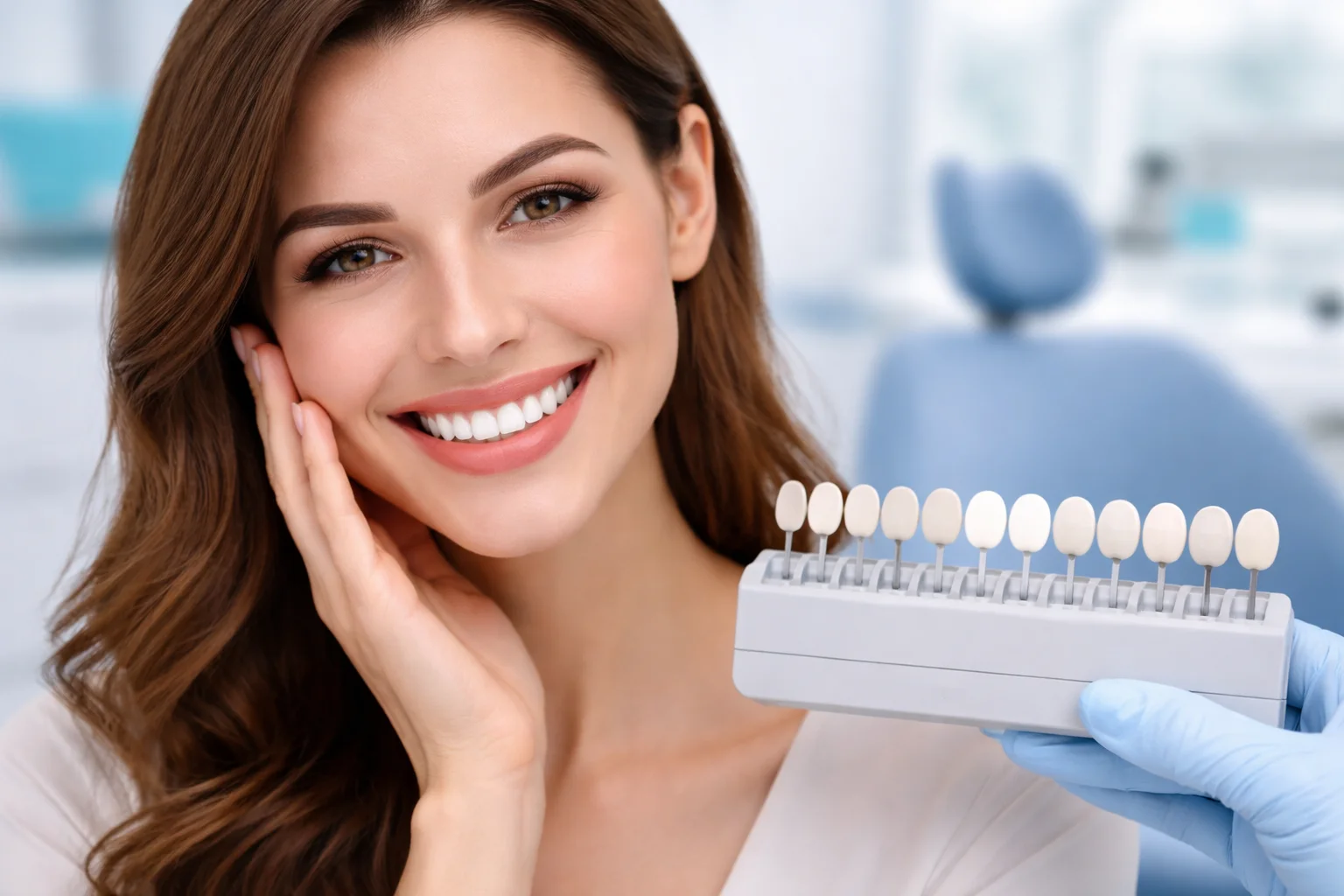
You have been reading about Lumineers and the appeal is obvious. No drilling, no shots, potentially reversible, and a brand name that has been marketed heavily for two decades as the gentler alternative to traditional veneers. What the marketing does not tell you is when Lumineers are the wrong clinical choice and why placing them on the wrong candidate produces exactly the thick, unnatural result every patient is trying to avoid. Dr. Joseph Goodman DDS DMD started using Lumineers in 1999, years before marketing efforts made them widely known, training with porcelain veneers in Germany in the 1990s when the technique required precision most dentists were not willing to develop. Patients from West Hollywood, Century City, and Brentwood come to this practice because they want a clinical answer, not a brand recommendation.
The confusion around Lumineers versus traditional veneers is largely a marketing problem. Lumineers became popular because the brand solved a real patient anxiety about drilling and irreversibility. But that marketing created the impression that Lumineers work for everyone, which they do not. Dr. Goodman will tell you directly which option fits your clinical situation before recommending anything, and about 20 percent of patients who arrive with a clear preference leave with a different recommendation after the evaluation.
What Lumineers Actually Are And What They Are Not
Lumineers are a specific brand of no-prep veneer made from Cerinate porcelain by Den-Mat Holdings. They are not interchangeable with all no-prep or minimal-prep veneers, and that distinction matters clinically. The Cerinate material is ultra-thin, typically 0.2 to 0.3mm, which is what allows placement with little or no tooth reduction. The thinness is the feature. It is also the limitation. Because the porcelain is so thin it cannot mask significant underlying tooth color, which means dark or heavily discolored teeth show through the veneer after placement. This is the limitation most Lumineers marketing never mentions.
There are also other minimal-prep veneer options made from eMax and other porcelain materials that perform better aesthetically in certain cases than the Cerinate Lumineers brand. Dr. Goodman places Lumineers specifically when the clinical case calls for the Cerinate material and its properties. When a different minimal-prep material produces a better result for the patient’s specific tooth anatomy and color, that is what he recommends. The brand name is not the goal. The result is.
When Lumineers Are the Right Clinical Choice
Not every patient needs tooth preparation. For the right candidate Lumineers produce a beautiful natural-looking result with no irreversible changes to the existing tooth structure. Dr. Goodman has been identifying these cases since 1999 and the criteria have not changed. Here is when Lumineers tend to work best.
- Smaller teeth that need more prominence or length where adding thin porcelain does not create bulk.
- Inclined or rotated teeth where the natural angle creates space for the veneer without protrusion.
- Patients whose existing tooth shade is close to the desired result and only minor color refinement is needed.
- Cases where closing small gaps or improving minor spacing is the primary concern.
- Patients who want maximum preservation of natural tooth structure and are appropriate candidates clinically.
- Cases where whitening before placement has been completed to ensure the thin porcelain reflects the correct base shade.
When these conditions are met Lumineers are not a compromise. They are the most conservative path to a natural-looking result and the one that best honors the first of Dr. Goodman’s 10 Commandments of Veneer: respect the tooth.
When Traditional Porcelain Veneers Perform Better
Lumineers have real limitations that make traditional or minimal-preparation porcelain veneers the better clinical choice in a significant number of cases. The bulkiness problem is the most common. Adding Lumineers to a tooth that already fills its natural space creates thickness that reads as unnatural from across a room. Dr. Goodman sees this result regularly in correction cases, patients who arrive after Lumineers were placed on the wrong tooth anatomy. Here is when traditional veneers consistently outperform Lumineers.
- Teeth that are already large, prominent, or protrusive where adding any thickness without reducing creates a bulky result.
- Cases requiring a dramatic shade change where the thin Cerinate material cannot provide adequate color masking.
- Significant discoloration including tetracycline staining, dark dentin, or old composite restorations showing through.
- Teeth with chips, cracks, or surface damage that exceed the coverage capacity of 0.2 to 0.3mm porcelain.
- Cases where the desired tooth shape requires a thicker restoration to achieve the correct proportion and contour.
- Patients who want a super-white shade change beyond what whitening plus Lumineers can achieve together.
About 25 to 30 percent of correction cases at this practice involve patients whose Lumineers were placed on the wrong candidate. The result was too thick, too opaque, or the color was wrong because the existing tooth showed through. Those cases require removal and replacement with properly prepared porcelain veneers, which is a more involved process than getting the right diagnosis at the first consultation.
Lumineers vs Porcelain Veneers: The Clinical Comparison
The right choice depends entirely on your tooth anatomy, your existing shade, and your aesthetic goals. Dr. Goodman evaluates all of these factors before recommending either option. Here is how they compare across the clinical factors that matter most.
| Factor | Lumineers | Traditional Porcelain Veneers |
| Tooth preparation | Little or no reduction | 0.3 to 1mm depending on type |
| Best candidate | Smaller teeth, light discoloration, minor concerns | Larger teeth, significant shade change, correction cases |
| Color masking | Limited. Dark teeth show through thin Cerinate porcelain. | Strong. Full shade control with proper preparation. |
| Longevity | 10 to 12 years with proper care | 15 years and longer with proper placement |
| Reversibility | Potentially reversible in true no-prep cases | Permanent in most preparation cases |
| Bulkiness risk | Higher on larger or prominent teeth | Lower when preparation creates proper space |
The longevity difference is worth understanding. Lumineers placed on the right candidate and properly bonded last well. Lumineers placed on the wrong candidate wear, chip, and debond earlier because the bite forces and tooth geometry were never compatible with the material. That is why the clinical evaluation matters more than the brand preference.
The One Thing Most Dentists Do Not Tell You About Lumineers
Before placing no-prep veneers on any patient, the existing tooth shade must be as close as possible to the desired final result. Because Lumineers are only 0.2 to 0.3mm thick, the underlying tooth color influences the final appearance significantly. A patient who arrives wanting bright white Lumineers on dark yellow teeth will not get bright white Lumineers. They will get a veneer that reflects the dark base shade through the thin porcelain. The correct protocol is to complete whitening treatment first, confirm the new base shade is stable, and then fabricate the Lumineers to match the brightened tooth color. Most practices skip this step. Dr. Goodman has placed Lumineers since 1999 and this protocol has been standard at this practice from the beginning.
The second thing most dentists do not discuss is the difference between the Cerinate Lumineers brand and custom minimal-prep alternatives. Cerinate is a good material for the right case. It is not the only material available for minimal-prep placement, and in many cases eMax or other pressed ceramics provide better shade control and more aesthetic flexibility while still requiring little or no preparation. The clinical goal is always the natural result that nobody can detect. The material choice serves that goal. The brand name does not.
The Right Answer Starts With an Honest Clinical Opinion
You have read enough about Lumineers to know that the brand promise is compelling and the marketing is convincing. What you cannot determine from marketing is whether your specific tooth anatomy, existing shade, and aesthetic goals make you a Lumineers candidate or someone who will end up in a correction case two years from now. The patients who find their way to this practice from West Hollywood, Century City, Brentwood, and across the country arrive because they want that honest clinical opinion from someone who has been making this distinction since before Lumineers became a household name.
Dr. Joseph Goodman DDS DMD, California License 47521, has been placing Lumineers and all three veneer types in Beverly Hills since 1999, trained in Germany and dual-credentialed in the United States. Whether the evaluation confirms you are a strong Lumineers candidate, a better fit for minimal-preparation alternatives, or someone who needs traditional preparation for the result you want, the first step is an honest consultation with no pressure and no obligation. Call (310) 860-9311 or schedule your consultation today.
Frequently Asked Questions
Are Lumineers better than porcelain veneers?
Neither is objectively better. The right choice depends on the starting condition of your teeth, your existing tooth shade, and your aesthetic goals. Lumineers perform exceptionally well on smaller teeth with light discoloration where minimal preparation is clinically appropriate. Traditional porcelain veneers perform better on larger teeth, cases requiring significant shade changes, or patients with existing discoloration that exceeds the masking capacity of 0.2 to 0.3mm Cerinate porcelain. The clinical evaluation determines which option fits your situation, not personal preference or brand recognition.
How long do Lumineers last compared to traditional veneers?
Lumineers placed on appropriate candidates with proper bonding technique typically last 10 to 12 years with proper care. Traditional porcelain veneers placed with proper preparation and bite assessment last 15 years and longer. The longevity gap narrows significantly when Lumineers are placed on the right candidate and widens dramatically when they are placed on the wrong one. Lumineers placed on teeth that are too large or on cases with incompatible bite dynamics fail earlier because the material and preparation were not matched to the clinical situation.
Can Lumineers cover dark or severely discolored teeth?
Not reliably. The Cerinate porcelain used in Lumineers is ultra-thin and highly translucent, which means the underlying tooth color influences the final appearance significantly. Mild to moderate discoloration can be addressed with Lumineers when whitening treatment is completed first to brighten the base shade before fabrication. Severe discoloration including tetracycline staining, dark dentin, or heavily stained teeth generally requires traditional porcelain veneers with adequate preparation depth to provide the coverage and opacity needed for a natural-looking result.
How do I know if I am a candidate for Lumineers in Beverly Hills?
The only reliable way to determine Lumineers candidacy is a clinical evaluation that includes photographs, shade analysis, tooth size assessment, and bite evaluation. Good candidates typically have smaller teeth, light to moderate discoloration, and no significant bite issues. Patients with larger or prominent teeth, significant discoloration, or bite problems that would place stress on thin porcelain are usually better served by minimal-preparation or traditional veneers. Dr. Goodman has been making this clinical distinction since 1999 and will give you a direct answer on which approach fits your situation during your first visit.