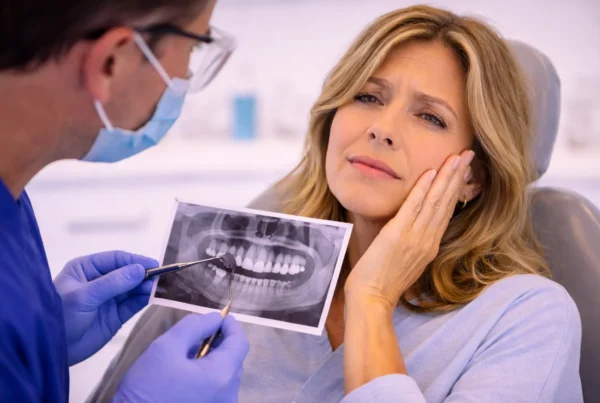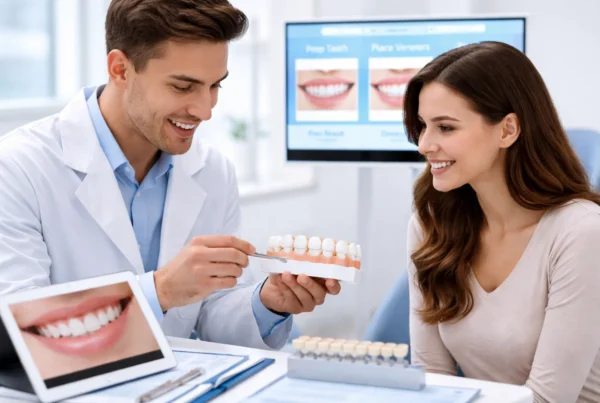



Teeth whitening with sensitive teeth is possible for most people, and the sensitivity is manageable rather than unavoidable. Dr. Joseph Goodman, DDS, DMD, has handled cosmetic cases in Beverly Hills for 27 years. He holds California license 47521 and trained in Germany and the United States. Below is why whitening stings, what reduces it, and when that sting means something else.
The fear here is specific, because you have already felt that electric jolt from cold water. Paying to feel it again on purpose is a hard sell. Some people put off whitening for years over that memory alone. Others push through a drugstore kit at full strength and make the whole thing worse. They conclude their teeth cannot be whitened at all. Both outcomes are avoidable.
Can You Whiten Your Teeth If They Are Already Sensitive?
Usually yes, though the protocol has to change. In one tray-based study, 16 of the 30 patients felt sensitivity at some point during whitening. That is roughly 53 percent. Of the 12 who then used a desensitizing gel, 11 said it dropped. Sensitivity is common, and it is not the same thing as damage. Roughly half of patients feel something, and most of them keep going anyway.
What changes for a sensitive patient is concentration, contact time, and spacing. A lower-strength gel worn briefly over more days reaches the same shade with far less discomfort. It takes longer, and that is the trade you are making. Dr. Goodman’s approach to professional teeth whitening starts by matching protocol to how your teeth behave.
The other half of the answer is diagnostic, because sensitivity that predates any whitening deserves an explanation first. Peroxide should not go near an unexplained symptom. That one exam is the difference between a comfortable result and an expensive lesson.
Why Does Whitening Make Teeth Sensitive?
Two layers explain it. Enamel is not solid the way it looks. Underneath sits dentin, threaded with microscopic tubules that run straight toward the nerve. Peroxide is a small molecule, so it passes through enamel and reaches that layer within minutes of contact.
Once there it irritates the pulp, and the nerve answers with the sharp, brief pain patients call a zinger. That is why the sensation arrives from nowhere and fades fast. Thin enamel, receded gums, and exposed roots shorten the distance peroxide travels. That is why one person feels almost nothing and the next feels a great deal.
How Do You Whiten With Less Sensitivity?
Most of the control sits in the protocol rather than in any product you buy. Concentration, contact time, and tray fit do the real work. Six adjustments change the experience more than any gel choice does.
- Use a lower peroxide concentration over more days instead of a high one over fewer
- Shorten each wear session, and stop for a day when a tooth starts complaining
- Use custom-fitted trays, which keep gel on teeth and off gum tissue
- Space treatments out rather than stacking them back to back
- Treat any decay, recession, or failing restoration before whitening begins
- Skip whitening entirely in the days before a dental cleaning
Custom trays matter more than most patients expect, because strips and generic trays are built for an average mouth. Gel leaks onto the gums and pools where it should not. A tray made from an impression of your own teeth holds material exactly where it belongs and nowhere else. That single change removes much of the discomfort people blame on the gel.

Which Whitening Method Is Gentlest for Sensitive Teeth?
Three delivery methods exist, and none removes sensitivity entirely. The delivery still makes a real and measurable difference. Concentration and how much gel touches gum tissue are what separate the three. The table lines them up against what matters for a sensitive mouth.
| In-office treatment | Custom take-home trays | Drugstore strips | |
| Peroxide concentration | Highest | Moderate | Lowest |
| Gum protection | Barrier placed by clinician | Tray fitted to your teeth | None |
| Control over dose | Full, session by session | High, you adjust nightly | Fixed by the box |
| Sensitivity risk | Higher per session | Moderate and adjustable | Variable, often from leakage |
| Best for sensitive teeth | When supervised closely | Usually the gentlest route | Least predictable |
Patients from Pacific Palisades and Culver City often arrive having tried strips twice and given up. Custom trays at a lower concentration often get them there, over weeks rather than one afternoon. Where the discoloration is internal rather than on the surface, bleaching cannot reach it. Porcelain veneers or dental bonding become the honest answer instead.
When Does Sensitivity Mean Something Else Is Wrong?
Whitening sensitivity is temporary and diffuse, spread across several teeth rather than one. Pain that is sharp, fixed to one tooth, or lingering past a few days is a different signal. It should be looked at rather than pushed through.
- Pain concentrated in one specific tooth rather than spread across several
- Sensitivity that keeps building after you stop whitening
- Aching on biting pressure, not only on cold
- Gum soreness that lasts beyond a day or two
- A tooth that was already sensitive before you started
Any of these can point to decay, a cracked tooth, recession, or a failing restoration. Whitening over an untreated problem does not cause it, though it does mask the timeline while the problem advances. Dr. Goodman does not do unnecessary work. He tells you when the honest answer is to fix something first and whiten afterward.
Find Out Why Your Teeth Are Sensitive First
An exam explains the sensitivity before anything gets whitened, and that order matters. Dr. Joseph Goodman, DDS, DMD, has spent 27 years on cosmetic cases at his Beverly Hills practice. It sits off Olympic Boulevard, near Beverly Cañon Gardens. His training in Germany and the United States built a practice that finds the cause before reaching for a product. Patients want a brighter smile without dreading cold water for a week afterward.
Bring anything you have already tried, including the strips that did nothing for you. Call (310) 860-9311 to book, or start on the cosmetic dentistry page. You can also read what patients say about the experience first. Results vary by case. You will hear plainly whether whitening is the right move for your teeth.
Questions Patients Ask About Whitening and Sensitivity
Will tooth sensitivity from whitening go away?
Almost always, and usually within a few days of stopping the product. Temporary sensitivity and gum irritation are common once you start a whitening product, and neither is unusual. The guidance is to take a break, or move to something milder. The nerve settles once peroxide stops reaching it. What should worry you is sensitivity that keeps escalating for days after you stop. Or that stays fixed on one tooth, because that pattern points at a cause whitening did not create.
Does professional teeth whitening damage your teeth?
Used as directed, whitening carries decades of use behind it, with no evidence of more cavities or fractures. The American Dental Association warns that whitening too often can harm enamel and gums. Frequency is the real risk rather than any single session, and back-to-back treatments are where trouble starts. Spacing sessions out protects the tooth, and it costs you nothing in shade. Supervision is what keeps an elective treatment from becoming a dental problem.
Will ibuprofen help sensitive teeth after whitening?
The evidence says no, which surprises most people. A systematic review screened 5,050 randomized studies and pooled the strongest 11 of them. The conclusion was blunt: anti-inflammatory drugs before bleaching are ineffective and unnecessary. Taking something ahead of a whitening session is not a strategy in itself. It can also hide a symptom worth noticing, and adjusting concentration and wear time does far more anyway. Ask your own dentist before taking anything around a procedure.
Is potassium nitrate good for whitening teeth?
It is by far the most common desensitizing ingredient in whitening gels. The trial evidence on it is genuinely mixed. Several triple-blind randomized trials found it did not reduce sensitivity at all. A JADA trial then reported something different. Combining a topical fluoride with an oral analgesic cut the risk of moderate or severe sensitivity roughly fourfold. Most consumer pages present desensitizers as settled. They are not, so protocol and tray fit carry more weight than any single ingredient.