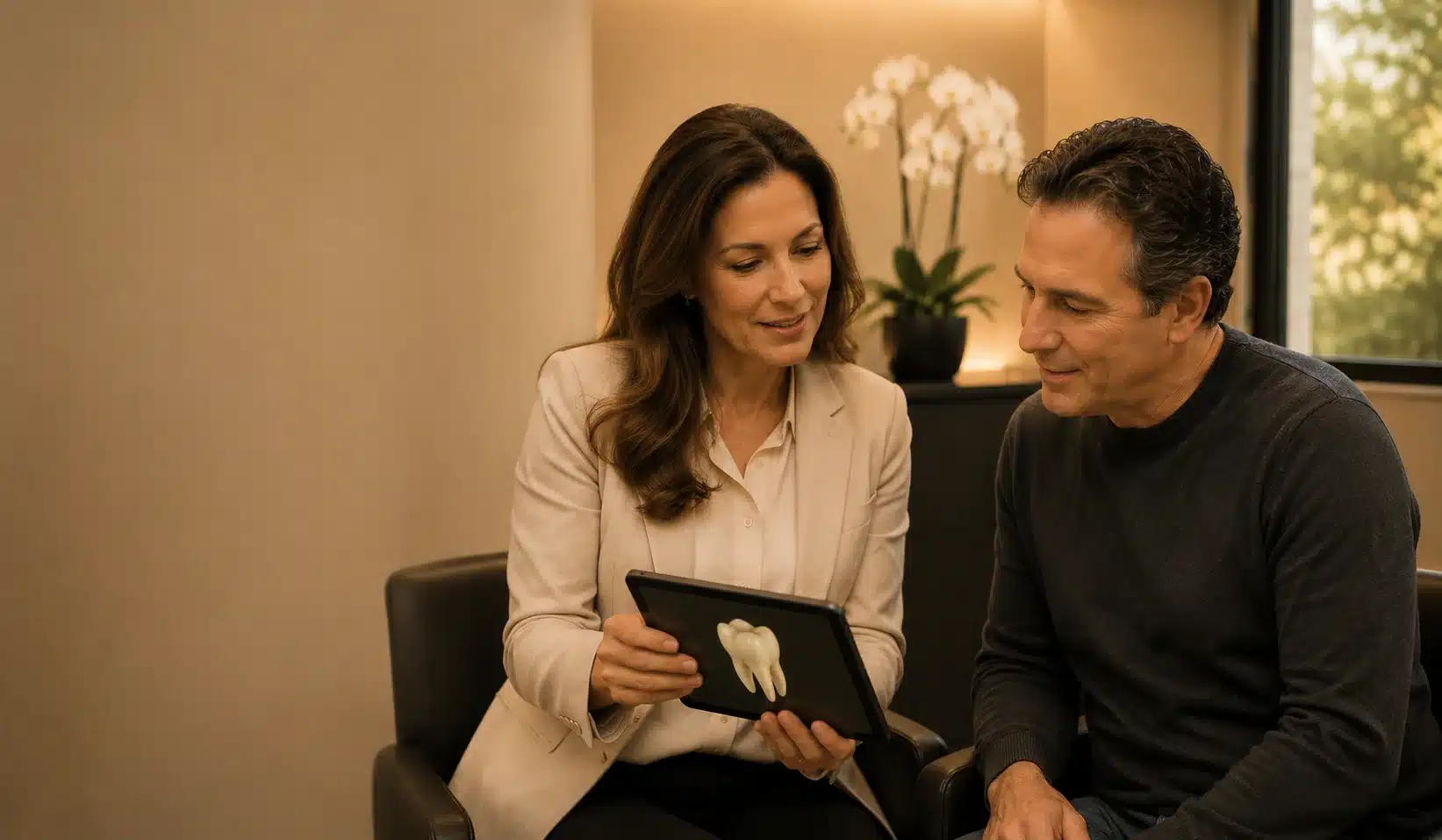
Most patients hear one plan when a tooth gets damaged. Get a crown. A dental crown caps the whole tooth and works in many cases. It is not your only option, and it is not always the right one. Before you reduce a healthy tooth, you deserve to see the alternatives.
Dr. Joseph Goodman has practiced in Beverly Hills for 27 years. He trained in Germany and the United States. He sends about one in five veneer candidates to more conservative care when a large case is not needed. The same honesty guides how he handles crowns. This guide shows the real alternatives and when each one fits.
Why Dentists Recommend Crowns, and When You Might Not Need One
A crown protects a tooth after heavy damage. Dentists recommend it after large decay, deep fractures, or a root canal. The cap covers every surface and holds a weak tooth together. For a tooth with little structure left, a crown is often the safest choice.
A crown also asks a lot from your tooth. The dentist removes healthy enamel on all sides to fit the cap. Over time, the margin near the gum can collect plaque and decay. When enough natural tooth remains, a smaller repair may protect more of it.
Some signs point toward a more conservative repair. They depend on how much tooth is left and where the damage sits. Your dentist weighs each one before recommending full coverage.
Signs a crown might be more than your tooth needs
- The damage sits in one or two surfaces, not the whole tooth.
- The outer walls of the tooth remain strong and intact.
- The fracture is shallow and stays above the gumline.
- You want to keep as much natural enamel as possible.
- The tooth has never had a root canal and stays healthy.
None of these guarantees you avoid a crown. They simply make other options worth discussing. A careful exam and an X-ray answer the question.
Inlays and Onlays, the Partial-Crown Option
An inlay or onlay repairs only the damaged part of the tooth. It restores the missing area with a precise, lab-made piece. An inlay sits inside the cusps, and an onlay covers one or more cusps. Both rebuild strength without capping the entire tooth.
These restorations suit moderate decay, large old fillings, and fractured cusps. A lab crafts them from porcelain or composite for an exact fit. You keep more healthy enamel than a crown allows. Cleaning is easier because the margins sit higher and smoother.
Dental Bonding and Larger Composite Repairs
Bonding rebuilds a tooth with tooth-colored composite in one visit. Your dentist layers the material, shapes it, and hardens it with a light. It works well for chips, moderate decay, and worn edges. The repair preserves nearly all of your natural tooth.
Bonding is the most conservative repair on this list. It also asks for honesty about its limits. Heavy grinding or a large missing section can reduce its lifespan. In those cases, an onlay or crown may serve you longer.
Veneers for Cosmetic-First Problems
Sometimes the real issue is how a front tooth looks, not how it works. A veneer covers the front surface and leaves the rest of the tooth alone. It corrects chips, hairline fractures, and worn edges on visible teeth. The preparation stays minimal compared with a crown.
A veneer does not fix deep decay or a weak structure. When a tooth needs full coverage, a crown or onlay is the honest answer. Dr. Goodman will tell you which problem you have. He treats the cause, not only the surface.
When the Tooth Is Too Far Gone
Honesty also means knowing when to stop saving a tooth. A deep vertical fracture below the gum can make repair unpredictable. Severe decay under old work can leave too little to build on. In those cases, replacing the tooth beats repeating failed repairs.
A dental implant replaces the root and the crown as one unit. It stands on its own without altering neighboring teeth. A bridge is another option when an implant is not ideal. Your dentist will explain the tradeoffs of each.
Crowns Versus the Alternatives at a Glance
A side-by-side view makes the choices clearer. The table below compares the main options on what matters most. Use it as a starting point, not a final verdict.
| Option | How much tooth is altered | Best suited for | General lifespan |
| Crown | Most, all surfaces reduced | Heavily damaged teeth or teeth after a root canal | Often 10 to 15 years or more |
| Onlay or inlay | Moderate, only the damaged area | Moderate decay, fractured cusps, large old fillings | Often 10 to 15 years |
| Bonding | Least, surface only | Chips, moderate decay, worn edges | Often 5 to 10 years |
| Veneer | Minimal, front surface only | Cosmetic problems on visible teeth | Often 10 to 15 years |
| Implant | Replaces the entire tooth | Teeth that cannot be saved | Can last decades with good care |
Numbers describe averages, not your specific tooth. Your bite, your habits, and your home care all change the outcome. A real plan comes from an exam, not a chart.
How to Decide, a Simple Framework
You do not need a dental degree to ask good questions. A simple checklist helps you weigh any crown recommendation. Bring it to your next visit and use it out loud.
Questions to ask before you agree to a crown
- How much healthy tooth will you remove for this crown?
- Would an onlay, inlay, or bonding work in my case?
- What happens if I try the more conservative option first?
- Is this tooth strong enough to avoid full coverage?
- Can I see the X-ray and the damage you see?
Good dentists welcome these questions. A clear answer builds trust and protects your tooth. If a dentist avoids these questions, consider a second opinion.
The Honest Bottom Line
You came here worried about losing more tooth than you need to. That worry is fair, and you are right to ask. Crowns help in many cases, yet they are one tool among several. The best plan saves as much of your natural tooth as possible.
Dr. Goodman has guided Beverly Hills patients through these choices for 27 years. He trained in Germany and the United States and treats three generations of families. He will tell you the truth before you spend money. Book a consultation and ask about every option for your tooth.
Frequently Asked Questions
Do I really need a crown, or are there alternatives?
Often there are alternatives. If strong tooth structure remains, an inlay, onlay, or bonding may protect it well. A crown becomes the better choice when little healthy tooth is left. An exam and X-ray show which group your tooth falls into.
Is an onlay as strong as a crown?
For the right tooth, a bonded onlay performs very well. It restores chewing strength while keeping more enamel. A crown still wins when damage is extensive or the tooth is brittle. Your dentist matches the repair to the amount of tooth left.
Can I avoid a crown after a root canal?
Sometimes though, back teeth often need full coverage after a root canal. A treated molar can turn brittle and split under chewing force. Front teeth with small access holes may do well with bonding. Ask your dentist which applies to your tooth.
How long do crown alternatives last?
It depends on the repair and your habits. Bonding often lasts five to ten years, while onlays can match crowns. Grinding, clenching, and diet all affect the result. You can explore conservative restorative dentistry options with Dr. Goodman to find the right fit.