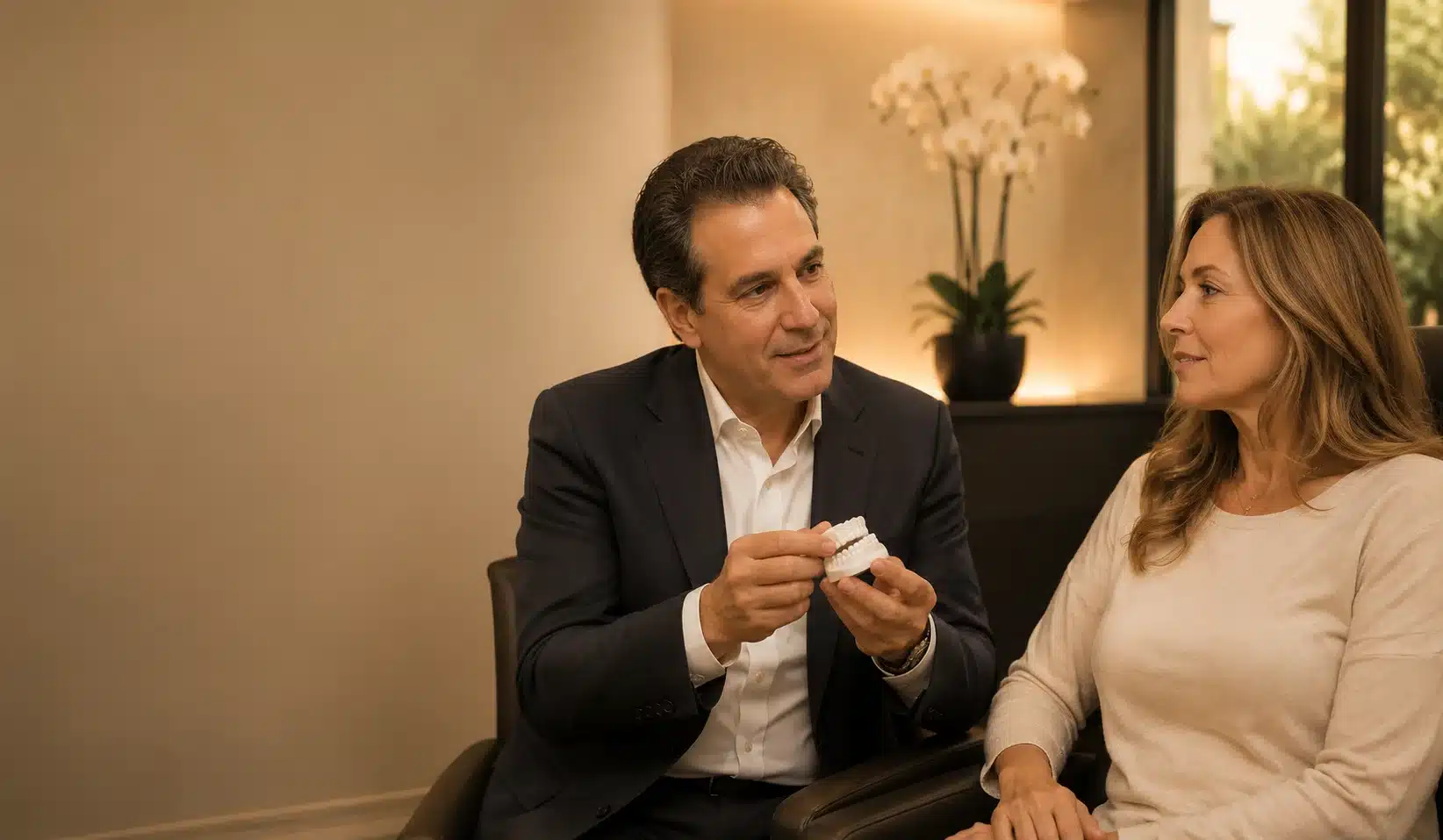
Your dentist says you need a crown, and you are not sure you believe it. You want to keep your natural tooth and lose as little as possible. At Dr. Joseph Goodman’s Beverly Hills practice, a crown is the last step, not the first. Patients come to him from Brentwood and West Hollywood to save teeth others would cap.
A dental crown protects a tooth, yet it removes healthy enamel that never grows back. Choosing it too soon can cost you tooth structure you did not need to lose. Often you can save your tooth without a full crown, using a smaller repair. This guide shows how, and how the right exam points you there.
Why Your Natural Tooth Beats Any Replacement
No crown, bridge, or implant works as well as the tooth you were born with. Your enamel is stronger and better shaped than anything a lab can build. Every full crown trades some of that healthy tooth for a cap. The less tooth you give up now, the more options you keep later.
Saving your tooth also keeps the nerve and gum in a healthier state. Smaller repairs stress the tooth less and tend to age well. They are usually easier to clean and to fix if needed. Preservation is not about doing less. It means removing only what the tooth can spare.
Catch the Problem Early, While Repairs Stay Small
Most teeth do not go from healthy to crown overnight. They pass through stages, and each stage has a smaller fix. A spot of early decay needs only a filling. Caught later, the same tooth may need a crown or a root canal.
This is why regular exams and X-rays matter so much. Your dentist can catch a hairline fracture or early decay before it spreads. The American Dental Association puts prevention and early care first, and so does this practice. Acting early usually means a smaller, less costly repair.
Daily habits protect your enamel between visits. Brush twice a day, clean between your teeth, and limit sugary drinks. If you grind at night, a custom guard saves your teeth from fractures. These simple steps lower your odds of ever needing a crown.
Start With the Smallest Fix That Works
A good plan matches the repair to the real damage, nothing more. A chip or small cavity calls for tooth-colored bonding or a filling. Moderate damage often suits an inlay or onlay, which rebuilds the area without a full cap. A crown becomes necessary only when little healthy tooth is left to save.
Choosing the smallest effective repair protects more of your tooth at every step. It also treats the problem you have, not the worst case. For a full look at each choice, see our guide to alternatives to dental crowns. Each option fits a different amount of damage.
How Much Tooth Each Option Keeps
The chart below lines up the main repairs by how much natural tooth they preserve. It runs from everyday prevention to a full crown. Use it to see where your tooth might land. Your exam, not the chart, makes the final call.
| Repair | What it does | How much tooth it keeps |
| Prevention and early care | Stops decay before it grows | All of it |
| Filling or bonding | Repairs a small cavity or chip | Nearly all of it |
| Inlay or onlay | Rebuilds moderate damage with a bonded piece | More than a crown |
| Full crown | Caps the whole tooth after major damage | The least |
Notice how each step up the chart asks for more tooth. A preservation-first dentist starts at the top and moves down only when needed. Your bite, your habits, and the damage all shape the choice. That is why an honest exam matters more than any single rule.
Signs Your Tooth May Not Need a Crown
Some teeth are better candidates for a smaller repair than a crown. The signs come down to how much healthy tooth remains and where the damage sits. Your dentist checks each one before recommending full coverage. A few common situations point toward saving the tooth.
- Decay or damage limited to one or two surfaces of the tooth.
- Strong outer walls of the tooth still standing.
- A shallow fracture that stays above the gumline.
- An old filling that is failing while the tooth around it stays sound.
- A vital tooth that has never needed a root canal.
None of these guarantees you avoid a crown on its own. Together they tell your dentist a smaller repair is worth a serious look. An exam and an X-ray confirm what the tooth can support. From there you and your dentist choose the most conservative option that lasts.
Work With a Dentist Who Saves Teeth First
Not every office shares the same instinct about crowns. Some recommend full coverage by default, even when a tooth can be saved with less. The dentist you choose shapes how much of your tooth you keep. This is where an honest, preservation-first approach pays off.
Dr. Goodman sends one in five veneer patients to conservative care when a big case is unnecessary. He brings that same honesty to crowns and fillings. Patients drive in from Westwood and Century City for that straight answer. He will tell you the truth before you spend money.
You are allowed to ask questions before you agree to anything. Ask how much healthy tooth a crown would remove. Ask whether a smaller repair would work first. A dentist who saves teeth first welcomes every one of those questions.
The Honest Path to Keeping Your Tooth
You came in wanting to keep your natural tooth, not lose more of it. That goal is within reach far more often than patients expect. A crown has its place, but it belongs at the end of the list, not the start. Early care and the smallest effective repair save the most tooth.
Dr. Joseph Goodman has guided Beverly Hills and Bel Air families through these choices for 27 years. He trained in Germany and the United States and treats three generations of patients. His Beverly Hills practice will show you every option before any tooth is touched. Schedule your evaluation today and find out how much of your tooth you can save.
Frequently Asked Questions
Can a tooth really be saved without a crown?
Often, yes, when enough healthy tooth still remains. A filling, bonding, or an onlay can restore the tooth and skip the cap. The American Dental Association notes that crowns are mainly for teeth too weak to hold a filling. You can review conservative restorative dentistry options with Dr. Goodman to find your fit.
How can I avoid needing a crown in the first place?
Prevention does most of the work here. Treat decay early, keep your cleanings, and address worn fillings before they fail. A nightguard protects your teeth if you clench or grind. The ADA’s prevention guidance ties brushing, flossing, and regular visits to fewer major repairs.
Is a filling or onlay as strong as a crown?
For the right tooth, a bonded onlay performs very well. It restores chewing strength while keeping more of your enamel. A crown still wins when the damage is large or the tooth is brittle. The ADA explains tooth-colored fillings resist normal chewing pressure in small to mid-size repairs.
Should I get a second opinion before agreeing to a crown?
Yes, a second opinion is smart before any major dental work. Bring your X-rays and ask each dentist to explain the options. Compare how much healthy tooth each plan would keep. The ADA suggests visiting more than one dentist before you decide.