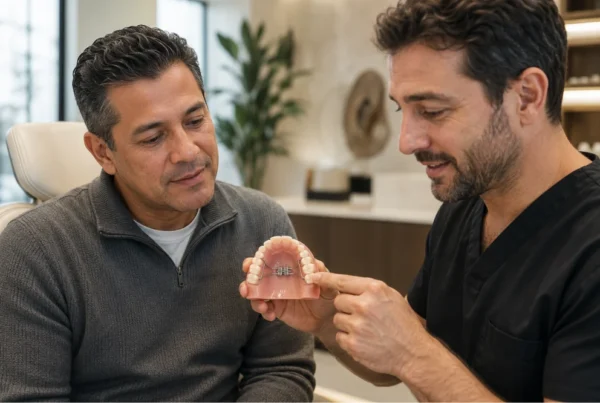

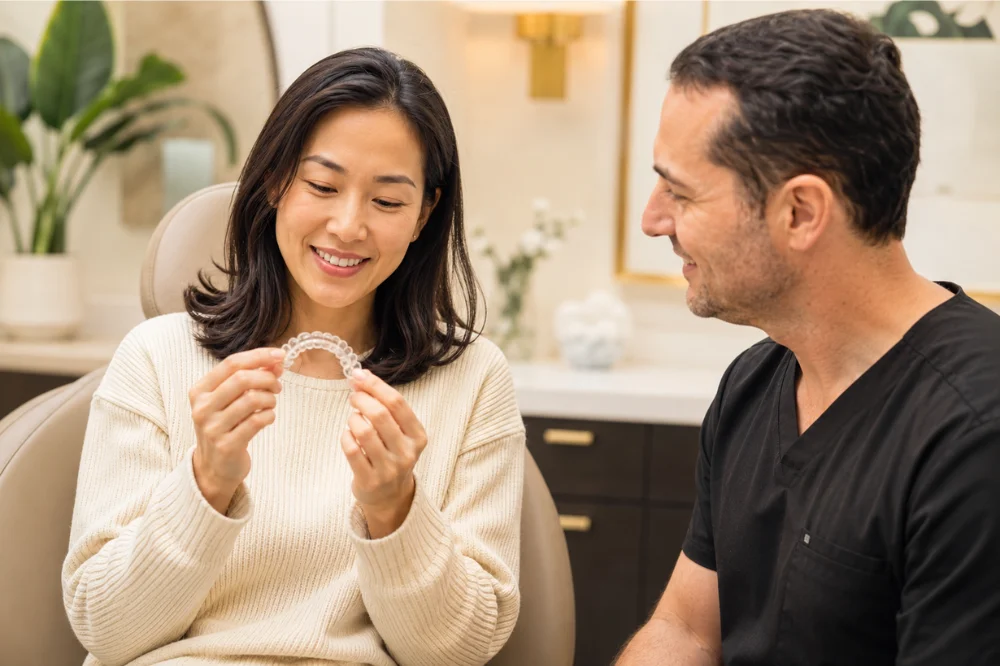

An overbite means your upper front teeth cover too much of your lower teeth. For most people, fixing one does not require jaw surgery at all. Clear aligners or braces move the teeth into a healthier, balanced bite. This guide explains how non-surgical overbite correction works and when it fits you.
Dr. Joseph Goodman has corrected bites in Beverly Hills for 27 years, trained in Germany and the US. Patients come to him from Beverly Hills, Bel Air, and Holmby Hills for this care. He treats the bite and the face together rather than one tooth at a time. His bite correction work centers on balance, comfort, and a natural, lasting result.
What Is an Overbite, and Can You Fix It Without Surgery?
An overbite is when your upper front teeth overlap the lower ones too far. A healthy overbite covers about 2 to 4 millimeters of the lower teeth. Anything deeper than this is often called a deep bite. Most overbites correct without surgery, using clear aligners or braces to reposition the teeth.
The right fix depends on whether the overbite comes from your teeth or your jaw. A dental overbite means the teeth erupted too far or tipped inward. A skeletal overbite means the jaws themselves sit out of proportion. When a set-back lower jaw also leaves a small chin, non-surgical chin augmentation can address both at once. Dr. Goodman checks the cause with an exam and X-ray before recommending care. This step keeps your plan matched to the real problem, not a guess.
What Happens If You Leave an Overbite Untreated?
An untreated overbite can wear your teeth down and strain your jaw over time. The lower teeth may bite into the gums or the roof of your mouth. Across 10 to 20 years, this pressure causes chips, cracks, and gum damage. Many people also feel jaw pain, headaches, and clicking as the joint works harder. The longer it goes untreated, the more repair the teeth may need.
A deep overbite affects more than how your smile looks in photos. It can make chewing less comfortable and wear down your front teeth early. Worn enamel does not grow back, so damage today tends to stay. Early treatment keeps the fix simple, while years of delay can make it harder.
What Causes an Overbite?
Most overbites come from jaw shape and genetics rather than anything you did. Knowing your cause helps Dr. Goodman choose the right plan for you. Here are the common reasons an overbite develops over the years.
- Genetics, since jaw shape and size often run in families
- A lower jaw that grew shorter or smaller than the upper jaw
- Childhood thumb sucking or long-term pacifier use
- Tongue thrusting or nail biting during the growing years
- Grinding or clenching that shifts how the teeth meet
- Missing back teeth that let the bite collapse deeper
Many of these causes begin in childhood, which is why early care helps so much. The American Association of Orthodontists suggests a first orthodontic visit by age 7. Guiding the bite while the jaw still grows can prevent bigger problems later. Adults can still fix an overbite, though the plan usually takes a little longer.
How Do You Fix an Overbite Without Surgery?
Non-surgical overbite correction moves your teeth with clear aligners, braces, and small bite tools. Most cases run about 12 to 24 months from start to finish. Aligners can intrude the front teeth or guide the back teeth into better contact. In deeper bites, bite ramps and elastics help open the overlap gradually. This steady approach reshapes the bite without any surgery.
Dr. Goodman often pairs clear aligners with FACE dentistry for the best result. This method reads your whole face, not the teeth alone, so your bite and features stay balanced. Every plan starts with a digital scan and a close look at how you bite. He walks you through the steps, the timeline, and the result before treatment begins. You always know what to expect at each stage of care.
Non-Surgical vs Surgical Overbite Correction: Which Do You Need?
The right path depends on how much of your overbite comes from teeth versus jaw. The table below compares the two options across the points patients care about most. Use it as a starting point rather than a final verdict on your bite.
| Option | How it works | Best for | Recovery | Timeline |
| Non-surgical | Aligners, braces, bite tools | Mild to moderate, dental | None, daily wear | 12 to 24 months |
| Surgical | Jaw surgery plus braces | Severe, skeletal | Weeks of healing | 18 to 24 months plus surgery |
Most overbites land in the mild to moderate range, where non-surgical care works well. When a case is severe and jaw-based, Dr. Goodman tells you honestly up front. He will not sell you an aligner plan when it cannot reach your goal. Your exam and imaging point to the honest choice for your case.

Are You a Candidate for Non-Surgical Overbite Correction?
Good candidates have healthy teeth along with a dental or mild jaw-based overbite. Your gums should be free of active disease before treatment begins. Here is what tends to make someone a strong fit for non-surgical care.
- A mild to moderate overbite driven mainly by tooth position
- Healthy teeth and gums with no active gum disease present
- Enough alignment to correct with aligners or braces alone
- A child still growing, where appliances can guide the jaw early
- A willingness to wear aligners 20 to 22 hours each day
- Realistic goals for a balanced, natural-looking end result
We treat any gum disease or decay first, since a healthy base helps teeth move safely. When a case is severe and skeletal, we walk you through the surgical route honestly. Either way, you hear a straight answer from Dr. Goodman before you spend a dollar. This honesty is the whole point of your first visit with him.
How Long Does It Take, and What Does It Cost?
Non-surgical overbite correction usually takes 12 to 24 months, based on how far teeth must move. Clear aligner treatment often runs between 3,000 and 8,000 dollars in total. Beverly Hills prices tend to sit a bit above the national average. Dr. Goodman gives you an honest quote after your exam, so nothing surprises you later. The quote lays out each stage of care in plain numbers.
Your final cost depends on how deep the bite is and which tools you need. A simple aligner case sits at the lower end, while a longer case runs higher. Many dental plans cover part of orthodontic care, and we check your benefits for you first. We also offer payment options through CareCredit, so you can spread the cost over time. You leave your first visit knowing your plan, your timeline, and your price.
Will Your Overbite Come Back After Treatment?
Your overbite can return if you stop wearing your retainer once treatment ends. Teeth naturally drift back toward where they started without something holding them. A retainer keeps your corrected bite locked in place for good. Most patients wear one nightly for the first 6 months, then a few nights weekly. The habit takes only seconds a day yet protects your whole result.
Dr. Goodman fits your retainer once your bite has fully settled into place. He checks the fit carefully and shows you how to clean and store it. A retainer costs far less than paying to redo your treatment later. Wear it as directed, and your corrected overbite should stay put for years. This one small habit protects all the time and money you put in.
Fix Your Overbite and Protect Your Smile with Dr. Goodman
You came here wondering if an overbite means surgery, and for most people it does not. You deserve a bite that works well and teeth that last for years. Dr. Goodman has corrected overbites in Beverly Hills for 27 years, trained in Germany and the US. He treats three generations of families from Century City to West Hollywood with the same honest care. His patients return for years because he earns their trust.
The next step is simple and comes with no pressure at all. Come in for an honest exam, and Dr. Goodman will map out a clear plan. He tells you the truth about your options before you spend a single dollar. Book a consultation today and find out if you can fix your overbite without surgery.
Frequently Asked Questions
Can an overbite fix itself without treatment?
No, an overbite does not correct on its own, and it often deepens over time. In children, a first orthodontic checkup by age 7 can catch it while the jaw still grows. In adults, the bite stays put until treatment actively moves it. The sooner you begin, the simpler the fix tends to be.
Does fixing an overbite change your face?
Yes, correcting a deep overbite can bring your lower face into better balance. As the bite opens, your chin and jawline often look more even and proportioned. An untreated deep bite can also cause jaw pain and tooth wear. Dr. Goodman plans each result with your whole face in mind, not the teeth alone.
Can adults fix an overbite with clear aligners?
Many adults do this with a course of clear aligners. They move a mild to moderate overbite without any surgery at all. Adult jaws no longer grow, so treatment shifts the teeth, not the jaw. A severe skeletal overbite can still need surgery. Dr. Goodman tells you which group fits you.
Is non-surgical overbite correction painful?
No, aligners and modern braces create mild pressure rather than real pain. You may feel sore for a day or two after each adjustment. That gentle pressure is how teeth move into place. Most people settle in within a week and soon forget the aligners are there.