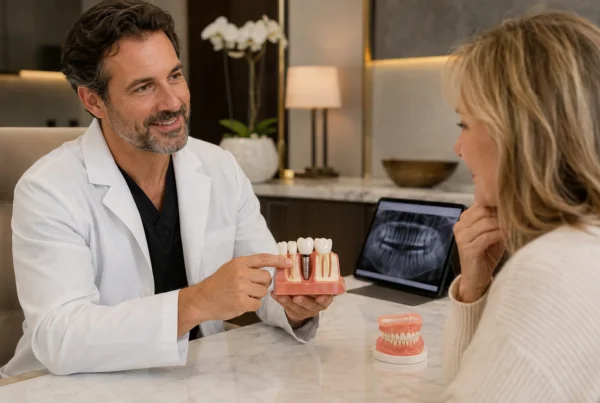



Dental insurance rarely covers a dental implant in full, and most plans exclude the implant post outright. Dr. Joseph Goodman, DDS, DMD, has practiced restorative dentistry in Beverly Hills for 27 years. He trained in Germany, practices in the United States, and reviews benefits before treatment begins. The fear here is financial. You are told yes on the phone, then billed no after the work is done.
Most practice pages answer this question with coverage varies, call us. This one answers it. Below you will find what plans typically pay, what they typically deny, and how to check yours. Getting this wrong is expensive. Patients start on a verbal yes and absorb the balance themselves. Plan terms vary, so treat every figure here as a starting point for your own policy.
Does dental insurance cover dental implants?
Most dental plans do not cover the implant post. Many cover part of the crown on top. Annual maximums reported by the American Dental Association commonly run $1,000 to $2,000. The National Association of Dental Plans tracks those caps across the industry. One implant usually costs more than that ceiling on its own. Coverage varies by plan, employer, and state.
The gap is structural rather than personal. Your plan sets a calendar year benefit and stops paying once you reach it. Preventive visits, coinsurance, and your deductible all draw on the same pool. A cleaning in March quietly reduces what is available in October. Read your certificate of coverage rather than the marketing summary. The exclusions list matters more than the benefits list.
Why do insurance companies call dental implants cosmetic?
Two clauses do most of the damage. An alternate benefit clause pays for the cheapest adequate tooth replacement, not the one you chose. A missing tooth clause excludes teeth lost before your policy started. A cosmetic exclusion then absorbs whatever is left. None of this reflects a clinical judgement about your mouth. It reflects how your policy was priced. Plans word these differently, so check yours.
In practice, a downgrade pays your implant claim at bridge or denture rates. Carriers including Delta Dental, Cigna, Guardian, Humana, and Aetna all use some version of it. You still receive money. You receive less than the treatment costs, and the difference lands in your out of pocket total. This is where dental bridges and dentures in Beverly Hills enter the conversation.
What parts of an implant does insurance usually pay for?
An implant is not one charge. It is billed in stages, each carrying its own CDT procedure codes. Dental plans and medical plans treat those stages differently, and the split surprises most patients.
| Treatment stage | Typical dental plan | Typical medical plan | What to ask before you start |
| Consultation and exam | Often covered | Rarely covered | Does this draw on my annual maximum |
| 3D scan and imaging | Sometimes covered | Sometimes covered | Is imaging billed separately |
| Extraction | Usually covered | Covered after trauma | What percentage applies |
| Bone graft | Sometimes covered | Covered if medically necessary | Is a predetermination needed |
| Implant post | Usually excluded | Only if medically necessary | Is there a cosmetic exclusion |
| Abutment | Varies widely | Rarely covered | Is this coded with the post or crown |
| Final crown | Often partly covered | Rarely covered | Does an alternate benefit apply |
Ask for a written predetermination before any stage begins. A predetermination states what your carrier will pay, in writing. Pre-authorization is the medical equivalent and works the same way. Both usually take two to four weeks to come back. Every figure quoted to you by phone is an estimate, not a commitment. Most partial payments land on the crown stage. Read the dental crowns detail before you sign.

Can medical insurance cover dental implants?
Sometimes, and the trigger is cause rather than treatment. Medical plans pay when tooth loss is medically necessary rather than elective. Four situations qualify most often. Accident or facial trauma, tumor or cancer surgery, congenital absence, and documented jaw pathology. Your medical carrier decides case by case.
A medical claim needs a clinical narrative and supporting records. Without documentation, a denial is close to automatic. If you are denied, you have the right to appeal in writing. Most first denials are administrative rather than final. Ask your dental office whether it will supply records to support that appeal. Photographs, imaging, and a written diagnosis carry the most weight.
What questions should you ask your insurance company before treatment?
Call the member services number on your card. Ask for answers in writing rather than verbally. These are the questions that change your number.
- What is my annual maximum and how much remains this year
- Is there a missing tooth clause on my policy
- Does an alternate benefit clause apply to implant claims
- Is there a waiting period, and when does it end
- What is my coinsurance percentage on major restorative work
- Is this dentist in-network or out-of-network on my plan
- Will you issue a written predetermination before treatment starts
Record the reference number for every call. Ask the representative to send answers by email or post. A written predetermination protects you far better than a phone quote. Verbal quotes are not binding on your carrier. Plan terms vary, so your answers will not match anyone else’s.
How do you lower the out-of-pocket cost of implants?
Timing moves the number more than negotiating does. Your benefit resets every calendar year. Phased treatment across two years uses two resets instead of one.
- Begin treatment late in one benefit year and finish in the next
- Spend the current year’s remaining annual maximum on extraction or bone graft
- Pay with HSA or FSA dollars, which come out pre-tax
- Ask about third-party medical financing such as CareCredit monthly payment plans
- Request a superbill if your office does not file out-of-network claims
- Compare the whole treatment plan, not the price of one stage
None of this changes what your plan owes. It changes when the money moves. Implant treatment already runs across several months of healing, so phasing rarely delays anything clinically. A graft placed in December and a post placed in February draw on two separate years. Confirm timing with your dentist before planning around a benefit reset.
Get a straight answer on what your plan will pay
Dr. Joseph Goodman, DDS, DMD, has practiced restorative and cosmetic dentistry in Beverly Hills for 27 years. He trained in Germany and holds California dental license number 47521. He treats patients from West Hollywood, Century City, and Brentwood across Los Angeles County. If a bridge or a denture genuinely serves your plan better, he will tell you so.
Bring your benefits summary to a consultation. You get your dental implants in Beverly Hills options priced in writing before anything begins. The goal is to stop hiding a gap, not to file a claim. Call (310) 860-9311 or book your consultation at topbeverlyhillsdentist.com.
Dental implant insurance questions patients ask
What is a missing tooth clause and does it apply to me?
A missing tooth clause excludes teeth you lost before the policy began. The American Dental Association explains preexisting condition exclusions covering conditions present before enrollment, such as missing teeth. Prior creditable coverage can shorten that exclusion period. Check whether your previous plan counts toward it. Not every policy carries the clause, so read yours before assuming.
Does insurance cover bone grafting for implants?
Sometimes, because grafting is billed as its own procedure. The American Academy of Periodontology describes ridge modification as a separate step before implant placement. Plans excluding the implant post occasionally still pay toward the graft. A medical plan may cover it after trauma or documented pathology. Coverage varies by policy.
Will my plan pay for the crown if it will not pay for the implant post?
Often yes, and that split catches most people out. Cleveland Clinic notes implants support crowns, bridges and dentures as separate restorations. Many plans treat the crown as major restorative work and the post as excluded surgery. Your abutment can fall on either side of that line. Ask for a predetermination covering each stage.
Is there a waiting period before my plan covers implants?
Many plans impose six to 12 months on major restorative work. Implant treatment takes time regardless of your policy. The Mayo Clinic guide to dental implant surgery explains healing can run over many months. A waiting period therefore often overlaps treatment rather than delaying it. Confirm your start date in writing.