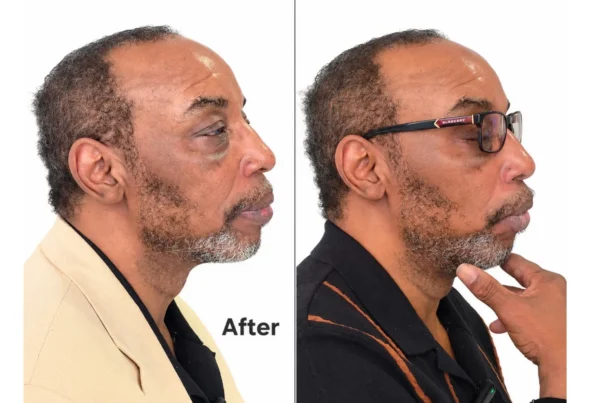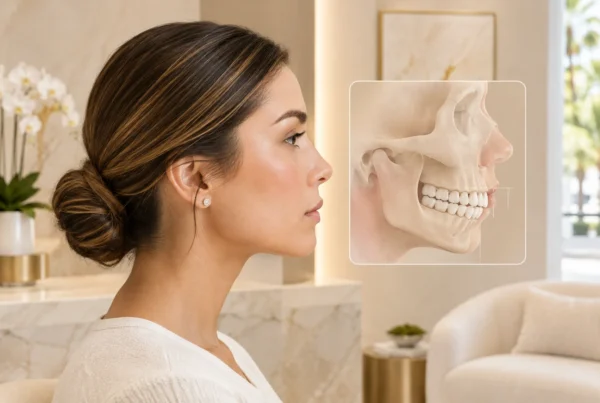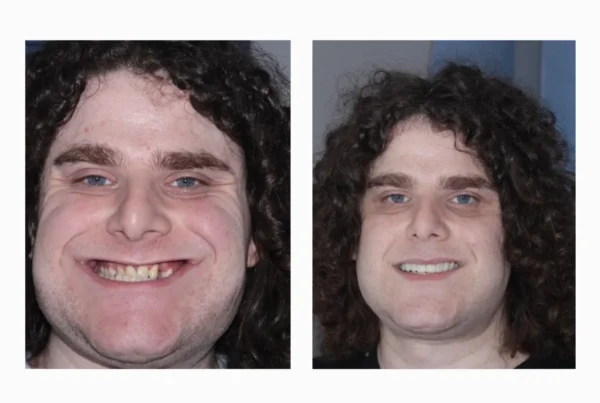



A surgical plan for a crossbite deserves a second reading from someone who does not perform the surgery. Dr. Joseph Goodman, DDS, DMD, has corrected bites in Beverly Hills for 27 years. He trained in Germany and the United States. This page covers what separates a skeletal crossbite from a dental one. It also lists the questions worth asking before you book anything.
The fear under this search is usually the same. You do not want to be talked into having your jaw cut. You also do not want to spend two years on a plan that was never going to hold. Waiting has its own cost, since a crossbite keeps wearing teeth unevenly and pulling the jaw off center. Bite correction starts with finding out which group you are in.
Does a Crossbite Actually Require Jaw Surgery?
Often it does not, and published research supports that. One study compared 43 adults who had surgically assisted palatal expansion against 38 adults treated without surgery. Measured at the canines, premolars, and molars, neither group came out ahead. The difference in total correction was not statistically significant.
That finding matters more than it sounds. Surgery gets presented as the serious option and everything else as a compromise. The research does not back that framing. Surgery earns its place when the skeleton genuinely demands it. That is a smaller group than the referral rate suggests.
Which Type of Crossbite Do You Have?
Type decides everything, so an exam settles this before any plan is written. A crossbite means upper teeth close inside the lower ones instead of outside them. It can sit at the front, at the back, or on one side only.
- Anterior crossbite, where upper front teeth sit behind the lower ones
- Posterior crossbite, where back teeth close inside the lower arch
- Unilateral crossbite, affecting one side and shifting the jaw on closing
- Dental crossbite, where the jaws line up and individual teeth are tipped
- Skeletal crossbite, where the upper jaw itself is narrow for the lower one
Getting the label right is not academic. When every upper front tooth sits behind the lower ones, that is a different diagnosis. Non-surgical underbite correction covers that case. A dental crossbite and a skeletal one lead to different plans, different timelines, and different conversations about cost.
How Does Dr. Goodman Approach a Crossbite?
TMJtrac is the heart of his method. It tests where your lower jaw and condyle belong rather than guessing at it. You live in that tested position for 2 to 3 weeks. Class 1 Veneers then hold the new position in place. No surgery, and no grinding down healthy teeth.
The test period is what makes a second opinion useful here. You feel the corrected bite before committing to anything permanent. A surgical plan offers no equivalent preview, since the result arrives after the bone has healed. Non-surgical crossbite correction walks through each stage in detail.
What Should You Ask Before You Schedule Surgery?
Take the plan to a clinician who does not perform the operation. Four questions separate a genuine surgical case from a reflexive referral. Ask every one of them before you commit.
- Ask which measurement makes this skeletal rather than dental
- Ask what happens to the bite if you wait five years
- Ask whether a non-surgical trial is possible first, and what it costs
- Ask who manages the joint afterward if symptoms continue
Dr. Goodman’s position here is blunt. He does not do unnecessary work, and he says so before anyone spends money. Where the joints are already sore, a TMJ and TMD assessment runs alongside the conversation. A surgical referral is not the default here.
How Do the Two Paths Compare?
Patients usually arrive with one option on the table and want to understand the other. The table below sets them side by side on what people ask about most. Use it as preparation for your consultation rather than a verdict.
| Question | Orthognathic jaw surgery | Face-Driven Dentistry with TMJtrac |
|---|---|---|
| What changes | The jawbone itself, cut and repositioned | The jaw and TMJ position, tested then held |
| Anesthesia | General, hospital based | None |
| Recovery | Weeks of healing, soft diet early on | None |
| Total timeline | Often 2 to 3 years | Weeks |
| Preview before final | No | Yes, during the 2 to 3 week test |
A genuine skeletal case still belongs with a surgeon, and Dr. Goodman says so plainly. He would rather send you across town than sell you a plan that cannot reach your goal. Your exam and imaging decide which column you belong in, and results vary by patient.
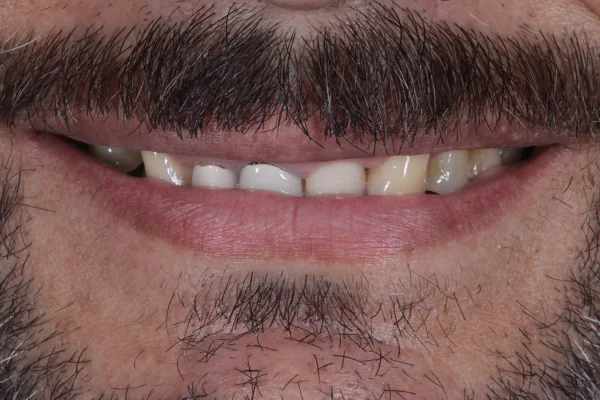
Is It Too Late to Correct a Crossbite as an Adult?
No. The route changes once jaw growth finishes, but the destination does not. In children the palate is still two halves that can be widened apart. In adults that suture has fused, so correction comes from the jaw position instead.
That distinction makes adult treatment sound harder than it turns out to be. Adults are treated at any age here, because the method works with the jaw you have today. Dr. Goodman tells you before you spend a dollar if a case genuinely needs surgery.
What Does a Second Opinion Visit Involve?
A second opinion takes about an hour and changes nothing about your existing plan. Dr. Goodman reviews your imaging, examines the bite, and tells you which category your case falls into. You leave with his reading in plain language. Nothing gets scheduled at that visit.
What he looks for is whether the jaw position explains the crossbite. When it does, a tested position often reaches the result you were told required surgery. When the skeleton is genuinely the problem, he says so. You go back to the surgeon with that confirmed. Either answer saves you from guessing.
Get a Straight Answer About Your Bite
An exam settles what a photograph and an afternoon of searching cannot. Dr. Joseph Goodman, DDS, DMD, has spent 27 years correcting bites at his Beverly Hills practice. It sits off Santa Monica Boulevard, minutes from Beverly Hills City Hall. His training in Germany and the United States built a practice treating bite and face as one system. That is Face-Driven Dentistry, and it is why TMJtrac comes before any talk of surgery.
Bring your imaging and whatever you were told elsewhere. You will leave knowing whether your crossbite is dental or skeletal. That answer sets everything else. Call (310) 860-9311 or visit topbeverlyhillsdentist.com to book. Results vary by patient, and you get a straight answer either way.
What Does Waiting Cost You?
Nothing dramatic happens in the first year, which is exactly why crossbites go untreated for decades. The teeth caught in the crossbite absorb more force than they should, meal after meal. Enamel wears, and worn enamel does not grow back.
The sideways shift does the quieter damage. You learn to chew in the position that feels easiest. One joint then carries more load than the other for years. Handled now, the plan stays simpler than it will be after another decade of that pattern.
Questions Patients Ask About Crossbite Surgery
Can a crossbite correct itself naturally?
No, and no exercise or stretch will move it. Nor will any appliance bought online without an exam. Cleveland Clinic notes that malocclusion is largely hereditary and treated by providers rather than at home. What you can do is protect the teeth already under strain. Keep the gums healthy and report new soreness early.
What happens if a crossbite is left untreated?
The bite keeps compensating, and that compensation does the damage over years. Untreated malocclusion is associated with tooth wear, decay, and gum disease, as MedlinePlus describes. A one-sided crossbite also shifts the jaw on closing, loading one joint harder than the other. None of it arrives suddenly, which is why people live with it for decades.
How common are bite problems like crossbites?
Common enough that most people have one to some degree. A review of worldwide data found malocclusion in roughly 56 percent of people. Only a portion of those cases need treatment at all. A crossbite that shifts your jaw sideways is a different matter. Your exam determines which group you fall into.
Does a crossbite cause jaw pain?
It can, since the joint absorbs the sideways shift with every meal. The National Institute of Dental and Craniofacial Research explains how TMJ disorders bring jaw pain, clicking, and headaches. Many patients come in for the bite and stay for the comfort. Dr. Goodman evaluates the joint at your first visit.